Plan for Solubility & Uniformity
Evaluate active ingredients and carrier systems to determine the right solution, emulsion or suspension approach for production.
- Solubility route
- Ingredient distribution
- Product appearance
LIQUID SUPPLEMENT MANUFACTURING
Develop liquid supplements with solubility, pH, viscosity, flavor, dose delivery and packaging planned together for reliable commercial production.
LIQUID MANUFACTURING READINESS
A commercial liquid needs to remain uniform, process reliably and deliver a consistent serving from the chosen bottle or dropper. We review those conditions before scale-up.
Evaluate active ingredients and carrier systems to determine the right solution, emulsion or suspension approach for production.
Balance acidity, sweetness, bitterness and aroma around the intended serving experience.
Match liquid behavior and serving volume to the intended dropper, cap or bottle format.

FORMULATION REVIEW
Solubility · pH · viscosity · dose delivery
FORMULA SYSTEM DESIGN
A commercial liquid formula must remain practical to mix, fill, dose and package while delivering the intended product experience.
Define whether the formula should remain clear, dispersed, emulsified or suspended throughout production and use.
Set the liquid environment around ingredient behavior, product stability and the intended sensory profile.
Control liquid behavior for mixing, transfer, filling and the selected dosing method.
Match the formula with the bottle, closure and serving system used for the commercial product.
LIQUID MANUFACTURING PROCESS
Once the liquid specification is approved, production moves through preparation, controlled mixing, filling and finished-product review as one connected route.
PREPARE
Verify approved ingredients, quantities and batch requirements before liquid processing begins.
MIX & CONDITION
Follow the defined addition sequence and apply the required mixing, homogenization, filtration or holding steps for the project.
FILL & CLOSE
Fill the approved liquid into the selected container at the target volume, then apply the specified closure and production coding.
INSPECT & PACK
Review the filled product and package against agreed project requirements before secondary packing.

PRODUCTION VIEW
Commercial filling is planned around the approved liquid specification, target volume and selected container.
COMMERCIAL LIQUID FORMATS
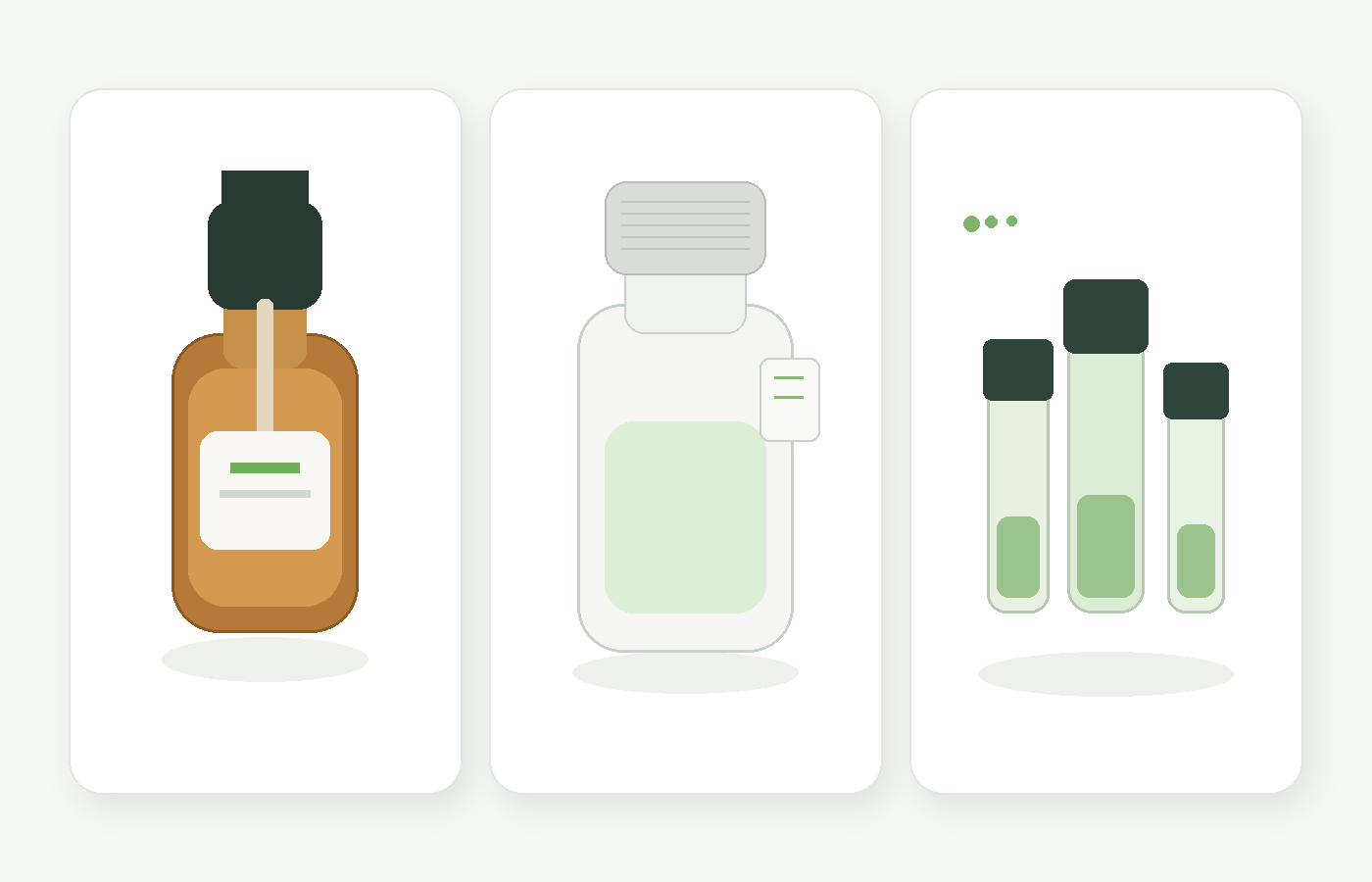
Bottle style, serving volume, viscosity and closure all influence how a liquid product is filled, used and presented to the market.
01 · PRECISION DOSING
Match dropper size, serving volume and liquid viscosity around consistent, repeatable dosing.
02 · MEASURED DOSE
Plan bottle size, serving volume and measuring method around larger-dose liquid formats.
03 · PROJECT-SPECIFIC
Review alternative delivery and packaging formats around fill behavior, protection needs and commercial volume.
PACKAGING VIEW
Serving volume, bottle material and closure should be planned around the finished liquid and intended use.
LIQUID QUALITY CONTROL
Liquid quality is reviewed throughout production against the approved formula, target fill volume and finished-pack requirements.
Review batch condition and formula uniformity against the approved product specification during production.
Monitor filled volume against the target serving and selected commercial container.
Review closure application, coding and finished-pack condition before secondary packing.
LIQUID MANUFACTURING FAQ
Answers to common questions about liquid formulas, dosing formats, packaging and commercial production.
Dropper-bottle projects are reviewed around serving volume, viscosity, bottle size, closure compatibility, product protection and destination-market requirements.
Depending on the ingredient system and product goal, development may evaluate a solution, emulsion or suspension direction. Appearance, use instructions and stability expectations should be agreed early.
Yes. Share the complete formula or specification, target serving volume, flavor direction, bottle and closure preference, testing requirements and estimated quantity for feasibility review.
Flavor direction can be developed around the active ingredients, acidity, sweetness, bitterness, aroma and intended serving experience, subject to project feasibility.
Serving volume, viscosity, light or oxygen sensitivity, dosing method and handling expectations can all influence the practical bottle and closure direction.
Send the formula or ingredient targets, serving volume, flavor direction, preferred delivery format, bottle or closure reference, destination market and estimated order quantity.
NEXT STEP
Share your formula, target serving volume, flavor direction and preferred packaging. We’ll use that brief to identify the key manufacturing decisions.