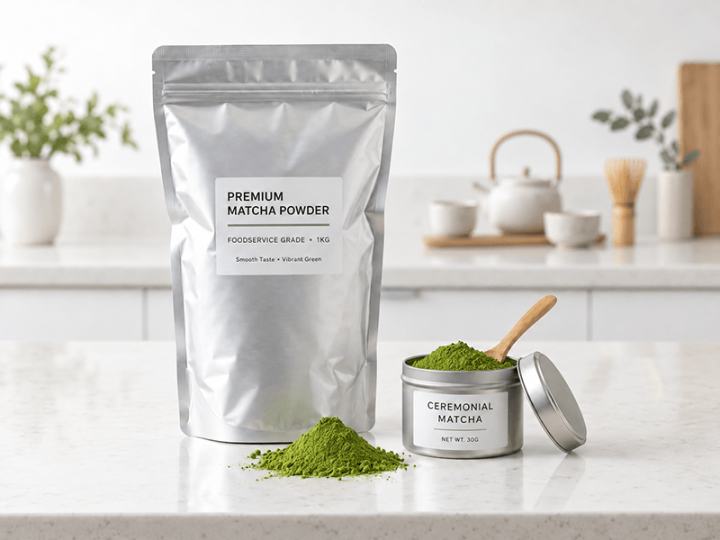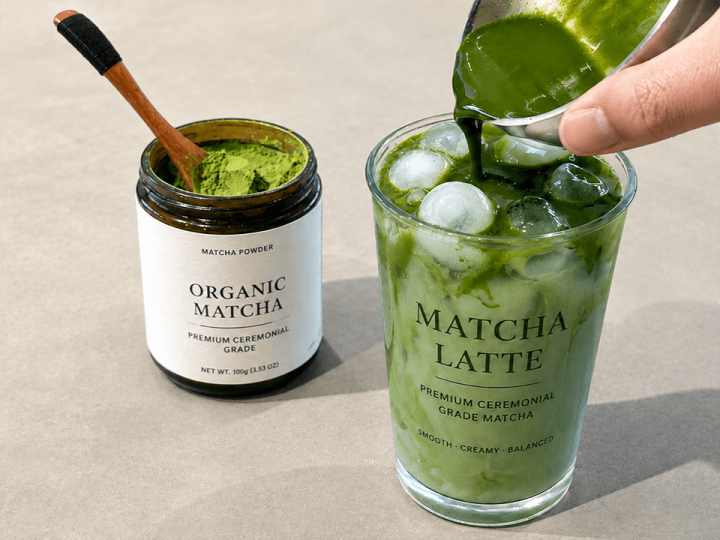
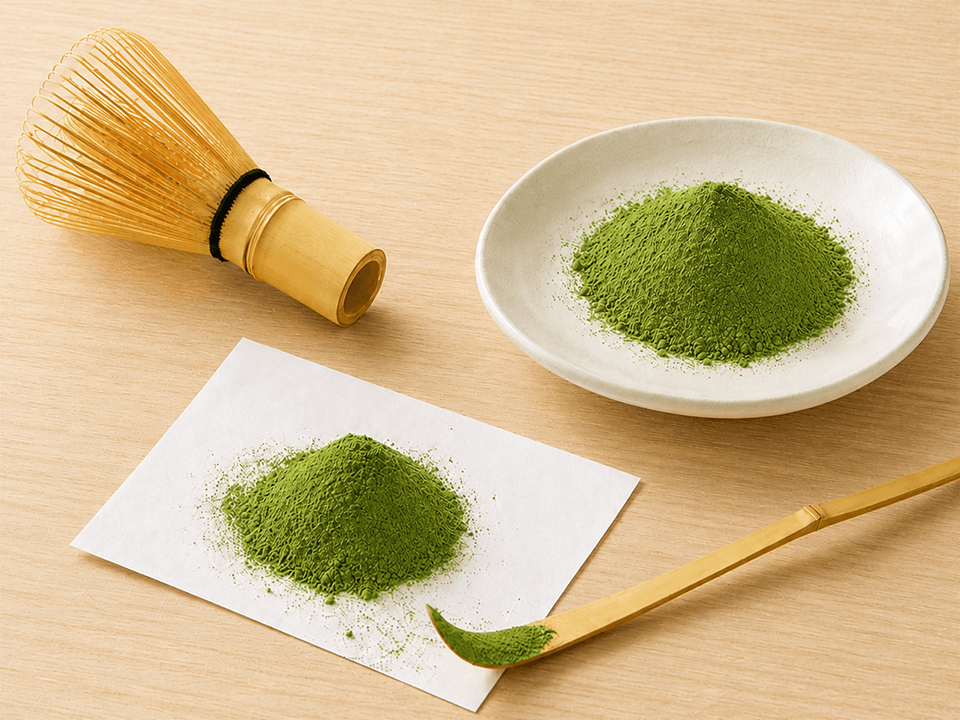
Matcha has developed from a specialist tea product into a widely used commercial ingredient. Cafés serve it in hot and iced drinks, food manufacturers add it to bakery and dessert products, and beverage brands use it in powdered blends and ready-to-drink concepts.
This broader demand creates opportunities, but it also makes supply planning more important. Matcha is an agricultural product, and its availability, color, flavor, price and lead time can vary between origins, harvests, grades and production periods.
For a business, a stable matcha supply chain does not mean eliminating every possible disruption. It means understanding the main risks, selecting suitable suppliers, planning inventory more carefully and creating practical alternatives before a shortage occurs.
A strong sourcing strategy should support consistent finished-product quality without creating unnecessary inventory or relying on one temporary sample. The following guide explains how cafés, beverage companies, food manufacturers, distributors and private label brands can build a more reliable bulk matcha supply system.
Why Matcha Supply Stability Matters
An unstable ingredient supply can affect more than purchasing costs. It may change the finished product, delay customer orders or force a business to reformulate after launch.
For a café chain, an unexpected change in matcha can alter the color and flavor of every drink across multiple locations. For a food manufacturer, a delayed shipment may interrupt production. For a private label brand, switching grades can create differences between the approved sample and the product customers eventually receive.
A stable supply chain helps reduce these risks by connecting product development, purchasing, quality control, inventory management and supplier communication.
Stability Is More Than Product Availability
A supplier may have matcha available, but that does not necessarily mean it is commercially interchangeable with the product already in use.
The replacement powder may have a different flavor intensity, green tone, particle size or application performance. It may also come with different documentation, certification coverage or packaging specifications.
For this reason, supply stability should be evaluated across several areas:
| Supply Chain Area | What Stability Means for the Buyer |
|---|---|
| Product quality | Color, flavor, aroma and texture remain within an approved range |
| Availability | Required volumes can be supplied according to the purchasing plan |
| Documentation | Specifications, COA and regulatory documents remain available |
| Packaging | Commercial pack sizes and materials remain consistent |
| Lead time | Production and delivery schedules are reasonably predictable |
| Communication | Changes are reported early enough for the buyer to respond |
| Cost | Price changes can be managed without making the product commercially unviable |
The goal is not to demand that every agricultural batch be identical. The more realistic goal is to define an acceptable quality range and ensure that changes remain controlled.
Begin with a Clear Matcha Product Specification
Many supply problems begin before the first commercial order. A buyer approves a sample based mainly on color or taste but does not document the characteristics that made the sample suitable.
When a later batch arrives, the supplier and buyer may have different interpretations of what “the same grade” means.
A more stable sourcing process begins with a written product specification.
Define the Intended Application
The specification should first explain where and how the matcha will be used.
Matcha for traditional drinking may need a smoother flavor and cleaner aftertaste. Matcha for cafés must remain noticeable after milk and sweeteners are added. Culinary matcha may require stronger flavor to perform in cakes, chocolate, ice cream or other processed foods.
A matcha used in a ready-to-drink beverage may need additional testing for sedimentation, heat treatment, acidity and shelf-life stability.
The buyer should therefore provide the supplier with information such as the final application, serving size, preparation process, target flavor, target color and expected finished-product cost.
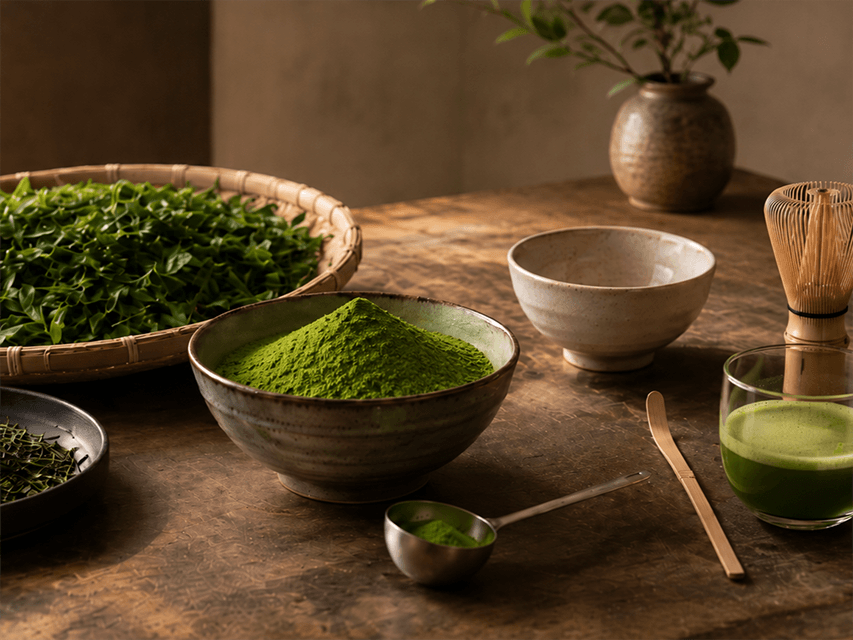
Document the Approved Quality Range
Not every item has to be highly restrictive. Excessively narrow specifications may make supply more difficult and expensive without creating a meaningful improvement in the finished product.
The specification should focus on characteristics that genuinely affect product quality, compliance and customer experience.
Use an Approved Reference Sample
A retained reference sample can support the written specification. The buyer and supplier can keep samples from the same approved batch and use them when evaluating future production.
This is particularly useful for sensory characteristics that are difficult to describe using numbers alone, such as vegetal aroma, umami intensity, bitterness and aftertaste.
However, the reference sample should not be used without laboratory and document controls. Physical samples can change during storage, especially if exposed to air, light, heat or moisture.
Select Matcha Based on Application Rather Than Grade Name
Commercial grade names are not always standardized. One wholesale matcha supplier may use the term “premium grade,” while another may classify a similar powder as “latte grade.”
A stable matcha supply chain should not depend entirely on marketing descriptions such as ceremonial, premium or culinary.
The buyer should understand what the selected product is expected to do inside the final formulation.
Commercial Application Comparison
| Application | Suitable Matcha Direction | Main Quality Priority | Main Supply Risk |
|---|---|---|---|
| Traditional drinking | Premium drinking matcha | Smoothness, aroma and clean aftertaste | Limited availability of a specific premium profile |
| Café lattes | Latte or café grade | Flavor visibility in milk and cost per cup | A new batch becomes too mild or too bitter |
| Bakery and confectionery | Culinary matcha | Flavor after heating and mixing | Color or flavor disappears in the recipe |
| Ice cream and desserts | Culinary or premium culinary | Color and bitterness balance | Excess bitterness at the required dosage |
| RTD beverages | Application-tested beverage grade | Dispersion, stability and repeatability | Sedimentation or color change during storage |
| Retail matcha powder | Grade selected for brand positioning | Appearance, taste and documentation | Product no longer matches label expectations |
| Functional drink blends | Formula-specific matcha | Compatibility with other ingredients | Uneven mixing or unstable flavor |
This application-based approach also gives the buyer more flexibility. When one exact grade becomes unavailable, the supplier can search for another product with similar performance rather than focusing only on the original grade name.
Avoid Depending on a Single Supplier Without a Backup Plan
Working with one main supplier can simplify quality control, purchasing and communication. However, relying on one source without evaluating alternatives creates unnecessary risk.
A stable matcha sourcing strategy usually includes a primary supplier and at least one qualified backup option.
The Role of the Primary Supplier
The primary supplier should handle normal commercial orders and maintain the agreed standard. This relationship benefits from clear forecasts, regular communication and documented quality expectations.
A reliable primary supplier should also report important changes early, including anticipated shortages, raw material changes, longer lead times, updated certification coverage or significant price adjustments.
The Role of a Backup Supplier
A backup matcha supplier should not be selected only after a disruption has already occurred.
The business should test alternative samples, review documentation and confirm commercial terms in advance. The backup product does not always need to be identical, but it should be suitable for the same final application.
For example, a café may approve one alternative matcha that produces a similar latte color and flavor using a slightly adjusted dosage. A bakery may approve a second culinary grade that performs consistently after baking.
Avoid Creating Unnecessary Supplier Complexity
Using too many suppliers can also create problems. Each additional source adds more specifications, samples, documents, payment terms and logistics arrangements.
For many small and medium-sized businesses, one qualified primary supplier and one realistic backup supplier may provide a better balance than managing several untested vendors.
Evaluate the Supplier Beyond the First Sample
A strong sample does not prove that a supplier can support long-term commercial production.
Before confirming a bulk matcha powder supplier, the buyer should evaluate the supplier’s systems as well as the product itself.
Production and Supply Capacity
The supplier should be able to explain the normal production lead time, available commercial volume, packaging capacity and approach to peak-season orders.
Buyers should also ask whether the supplier holds finished inventory, raw material inventory or reserved production capacity. Each model has different advantages and risks.
A supplier that keeps ready stock may support faster small orders, while a supplier working mainly through production planning may be better suited to regular high-volume purchasing.
Quality Control Procedures
The supplier should have a clear method for incoming raw material review, production control, batch sampling and final release.
Depending on the product and destination market, the buyer may request a specification sheet, Certificate of Analysis, microbiological testing, heavy metal results, pesticide residue reports, allergen information and country-of-origin documents.
Certification availability should always be confirmed for the selected grade, origin and processing facility. A certification shown on a company website does not automatically apply to every matcha product offered.
Communication and Problem Management
Supplier communication becomes especially important when supply conditions change.
A professional supplier should not wait until the expected shipping date to report that production is delayed. Early communication gives the buyer time to adjust inventory, approve an alternative grade or modify the delivery schedule.
Useful Supplier Questions
Rather than asking only for price and MOQ, a commercial buyer should also ask:
- How is batch-to-batch consistency managed?
- How far in advance should repeat orders be placed?
- What happens when the approved grade is temporarily unavailable?
- Can an alternative grade be reserved and tested?
- Which quality documents are provided for each batch?
- How are important specification changes communicated?
- What production or inventory capacity is available during peak periods?
The answers help reveal whether the supplier is prepared for a long-term business relationship or mainly focused on individual transactions.
Use Demand Forecasting to Improve Matcha Availability
Suppliers cannot plan production effectively when they receive no information until a buyer urgently needs stock.
A purchasing forecast does not have to be a binding order. It can be a practical estimate that helps both parties prepare raw materials, production time and packaging.
Build Forecasts from Real Sales Data
A café chain can estimate demand using the number of locations, average matcha drinks sold per day and matcha dosage per cup.
A food manufacturer can use planned production runs, finished-product forecasts and recipe usage. A private label brand can combine historical sales, promotional plans, seasonal demand and inventory already in storage.
Forecasts should distinguish between expected demand and committed orders. This prevents the supplier from treating an early estimate as a final purchase quantity.
Use Rolling Forecasts
A rolling forecast is updated regularly rather than prepared only once per year.
The exact time horizon should reflect production lead time, shipping method and sales volatility.
Review Forecast Accuracy
Forecasts will never be completely accurate, but repeated large differences between expected and actual demand should be reviewed.
If actual sales remain higher than expected, the buyer may need to increase safety stock or place orders earlier. If sales remain lower, the business may need smaller shipments to reduce inventory ageing.
Establish an Appropriate Safety Stock Level
Safety stock protects the business when demand rises unexpectedly or a shipment is delayed.
However, holding excessive matcha inventory can create another risk. Matcha is sensitive to oxygen, moisture, light and heat, so long storage periods may affect freshness and color.
The correct stock level should balance supply protection with product turnover.
Factors That Influence Safety Stock
A business should consider:
- Normal supplier lead time
- International transit time
- Customs clearance
- Demand variability
- Seasonal sales
- Supplier reliability
- Packaging size
- Product shelf life
- Storage conditions
- Cost of a stockout
A café using a standard latte-grade matcha may be able to hold more safety stock than a premium brand selling a highly freshness-sensitive drinking grade.
Reorder Point Planning
The reorder point should allow enough time for production and delivery before usable inventory reaches a critical level.
A business should not wait until the warehouse is almost empty before placing the next order. The purchasing schedule should include realistic allowances for production delays, international transport and customs processing.
Separate Normal Stock from Emergency Stock
Emergency inventory should not be used as part of routine daily stock unless necessary. When every order consumes the safety stock, the business no longer has protection against actual disruptions.
Plan Packaging as Part of the Supply Chain
Matcha powder and packaging often have different lead times.
A supplier may have bulk matcha available while the buyer’s custom tins, printed pouches or cartons are still in production. In other cases, packaging is ready but the selected matcha grade is delayed.
A stable private label matcha supply chain should coordinate both components.
Standard Bulk Packaging
Standard high-barrier foil bags usually provide greater flexibility because the supplier does not need to wait for custom printed materials.
This format can be suitable for cafés, food manufacturers, repacking companies and buyers testing the market with an initial order.
Custom Retail Packaging
Custom tins, pouches, jars, sachets, and cartons often have their own minimum order quantities and production schedules. Before production begins, the buyer should confirm the packaging material, fill weight, printing method, packaging MOQ, and expected manufacturing time. The artwork approval process, date and batch coding requirements, and the level of protection needed during storage and transportation should also be agreed in advance.
Packaging lead time should be included in the overall project schedule from the beginning rather than considered only after the matcha grade has been approved. This helps prevent packaging delays from affecting the planned production date or product launch.
Keep Critical Packaging Files Controlled
The final label artwork, color references, dimensions and print files should be stored in a controlled location. Using an outdated packaging version can cause compliance problems or require reprinting.
Use Packaging Sizes That Protect Product Freshness
Large bags may reduce packaging cost, but they are not always the best option for every user.
A café with moderate daily consumption may benefit from smaller bags because less powder is repeatedly exposed to air. A factory using several kilograms each day may be able to handle larger commercial packs efficiently.
The correct packaging size should reflect the rate of use after opening.
Storage Conditions Matter
Unopened matcha should remain sealed and protected from heat, humidity, light and strong odors. After opening, staff should use clean and dry tools and reseal the package promptly.
The buyer should also decide whether refrigerated or temperature-controlled storage is suitable for its operating environment. Storage instructions should follow the supplier’s product specification and should be practical for the actual warehouse or café.
Create a Formal Incoming Quality Control Process
A stable supply chain is not complete when the product leaves the supplier. The buyer needs a consistent receiving process.
Every shipment should be checked before the matcha is released for production or service.
Compare New Batches Before Full Use
A café chain can prepare a standard drink using the new batch and compare it with the current approved product. A manufacturer can run a small production test before releasing the entire batch.
If the new matcha performs differently, the business can investigate before the product reaches customers.
Define Acceptance and Escalation Rules
The quality team should know what to do when a batch falls outside expectations.
Minor Variation
A small natural difference that remains within specification may be accepted without changing the formula.
Application Adjustment
A batch may remain acceptable but require a minor dosage or preparation adjustment. Any change should be documented and tested before implementation.
Batch Rejection
A product that fails agreed safety, compliance or critical application requirements should not be used simply because replacement stock is difficult to obtain.
Manage Price Risk Without Choosing Only the Cheapest Matcha
Matcha pricing may vary according to grade, origin, harvest conditions, certification, production method, order volume and market demand.
A stable purchasing strategy should focus on total commercial value rather than the lowest price per kilogram.
A lower-priced powder may require a higher serving dosage. It may also create more waste or inconsistent finished products. A stronger and more stable matcha may have a higher kilogram price but a similar or lower cost per cup.
Compare the Complete Cost
The buyer should consider:
- Ingredient price
- Dosage per serving
- Freight and import costs
- Testing expenses
- Storage
- Packaging
- Preparation waste
- Product rejection risk
- Cost of production downtime
This broader calculation helps the business understand whether a price difference is commercially meaningful.
Discuss Price Validity and Review Periods
A supplier quotation should state how long the price is valid. For regular supply, the buyer and supplier may agree to review pricing at scheduled intervals rather than renegotiating every shipment without warning.
Long-term price commitments should be realistic. A fixed price can only remain sustainable when the underlying volume, period and market conditions are clearly defined.
Build Stronger Relationships with Matcha Suppliers
A stable supply chain is more likely when the buyer and supplier share useful information.
The buyer should communicate expected demand, launch dates, packaging plans and quality requirements. The supplier should communicate production capacity, lead times, product changes and potential supply risks.
A purely transactional relationship based only on the lowest quotation may provide limited support when the market becomes difficult.
Share Realistic Purchasing Plans
Suppliers can plan more effectively when buyers provide realistic order expectations. Inflated forecasts may lead to unnecessary reserved stock, while no forecast can make urgent orders harder to support.
A Practical Matcha Supply Chain Plan
Businesses can use the following process when building or improving their matcha sourcing system.
Step 1: Define the Finished Product
The business should document the product application, recipe, target market, required certifications, packaging and expected demand.
Step 2: Evaluate Application-Specific Samples
Samples should be tested under real production conditions, not only as dry powder or tea prepared with water.
Step 3: Approve a Specification and Reference Sample
The buyer and supplier should agree on measurable requirements and retain an approved sample where appropriate.
Step 4: Confirm Commercial Terms
MOQ, price validity, production time, packaging schedule, payment terms, shipping and documentation should be confirmed before ordering.
Step 5: Build a Demand Forecast
The buyer should provide a realistic rolling forecast and update it as sales information changes.
Step 6: Set Safety Stock and Reorder Rules
The inventory plan should cover normal lead time and reasonable disruption risk without holding excessive ageing stock.
Step 7: Qualify a Backup Option
An alternative supplier or grade should be tested and documented before the primary product becomes unavailable.
Step 8: Inspect Every Commercial Batch
The buyer should review packaging, documents and application performance before full release.
Step 9: Review the Supply Chain Regularly
Specifications, demand forecasts, supplier performance and alternative options should be updated as the business grows.
Common Mistakes That Make Matcha Supply Less Stable
Choosing Matcha Only by Color
A vivid green appearance can support product presentation, but it does not guarantee suitable taste, application performance or batch consistency.
Depending on a Grade Name
Terms such as ceremonial and premium may not represent the same standard across suppliers.
Approving Only One Sample
One successful sample does not prove long-term supply capacity or consistency.
Ordering Too Late
Urgent orders reduce shipping options and make alternative grade testing more difficult.
Holding Excessive Inventory
More stock does not always mean greater stability if the product loses freshness before it can be used.
Ignoring Packaging Lead Time
Custom packaging can delay a private label project even when the matcha itself is available.
Failing to Approve an Alternative
A backup product tested during a shortage may create rushed decisions and unexpected formula changes.
Frequently Asked Questions
How Far in Advance Should a Business Order Bulk Matcha?
The appropriate order time depends on production lead time, packaging requirements, shipping method, customs clearance and inventory levels.
Standard bulk packaging may require less preparation than custom retail packaging. Businesses should confirm lead times with the supplier and establish a reorder point based on actual operating conditions.
Should a Business Use More Than One Matcha Supplier?
A primary supplier and a qualified backup option can reduce dependency risk. However, using many suppliers without clear specifications may increase inconsistency and administrative work.
Each supplier should be evaluated through samples, documentation and commercial testing.
How Much Matcha Safety Stock Should a Business Hold?
There is no single suitable quantity for every buyer. Safety stock should reflect demand variability, supplier lead time, transit time, storage capacity, product shelf life and the cost of running out.
The stock level should be reviewed as sales patterns change.
Can Matcha from Different Suppliers Be Used Interchangeably?
Not automatically. Products with similar grade names may have different color, flavor, texture and application performance.
Alternative matcha should be tested in the final recipe and approved before commercial use.
What Documents Should a Bulk Matcha Supplier Provide?
Depending on the product and destination market, buyers may request specifications, a batch COA, microbiological and heavy metal results, pesticide residue information, allergen statements, country-of-origin documents and relevant certifications.
Availability should be confirmed for the exact grade and batch being purchased.
How Can a Café Maintain Consistent Matcha Drinks?
The café should use an approved matcha specification, standard recipe, fixed dosage, consistent preparation equipment and controlled staff training.
Each new batch should be tested with the café’s normal milk, sweetener and preparation method before being distributed to all locations.
Is the Cheapest Matcha Better for Supply Stability?
Not necessarily. A lower price may reduce ingredient cost, but the powder may require a higher dosage or provide less consistent performance.
Businesses should compare cost per finished product, supplier reliability, documentation and supply capacity rather than price alone.
Final Considerations
A stable matcha supply chain is built through preparation rather than emergency purchasing.
Businesses should begin with a clear product specification, test matcha in the final application and maintain realistic communication with suppliers. Inventory planning, backup approval, packaging coordination and incoming quality control should all be treated as part of the same system.
No agricultural supply chain can be completely free from variation. However, businesses can reduce disruption by deciding in advance which product characteristics are essential, which variations are acceptable and what action should be taken when supply conditions change.
The strongest matcha sourcing strategy is not necessarily the one with the largest inventory or the greatest number of suppliers. It is the one that combines clear standards, reliable information, practical alternatives and consistent commercial execution.
Build a More Reliable Matcha Supply Plan with TangMist
TangMist supports cafés, beverage brands, food manufacturers, distributors and private label companies with commercial matcha sourcing and supply planning.
Available support may include application-based grade recommendations, bulk matcha samples, commercial packaging options, product specifications, batch documentation and repeat-order planning. Matcha options can be evaluated for applications such as lattes, traditional drinking, bakery products, desserts, beverage mixes and retail products.
Businesses can share their intended application, target flavor, required volume, packaging format, destination market and expected purchasing schedule. TangMist can then recommend suitable matcha options for sample testing and commercial evaluation.
Request Matcha Samples and Supply Details
Contact TangMist to compare bulk matcha grades, discuss packaging and MOQ requirements, or build a more stable sourcing plan for future orders.