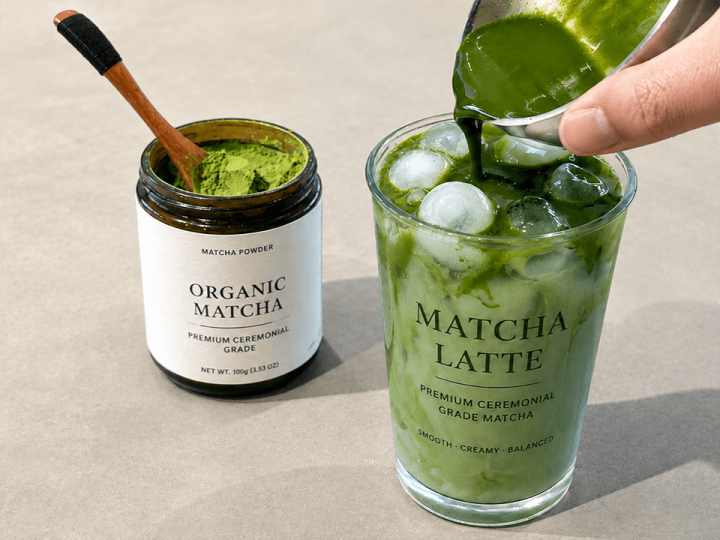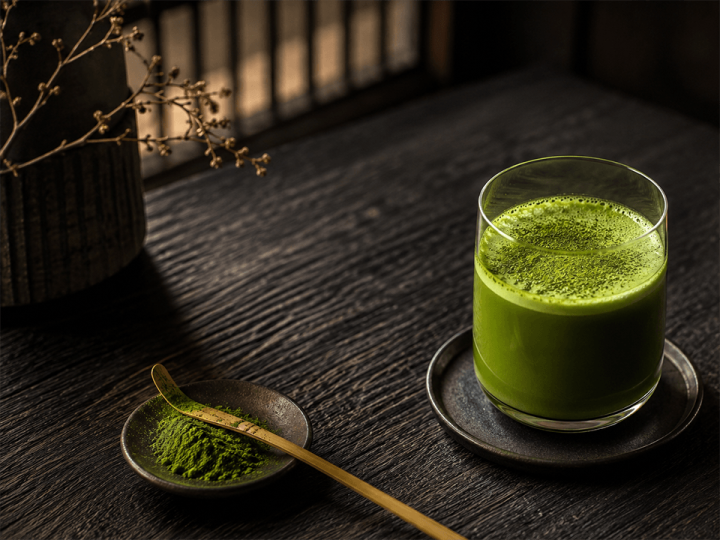
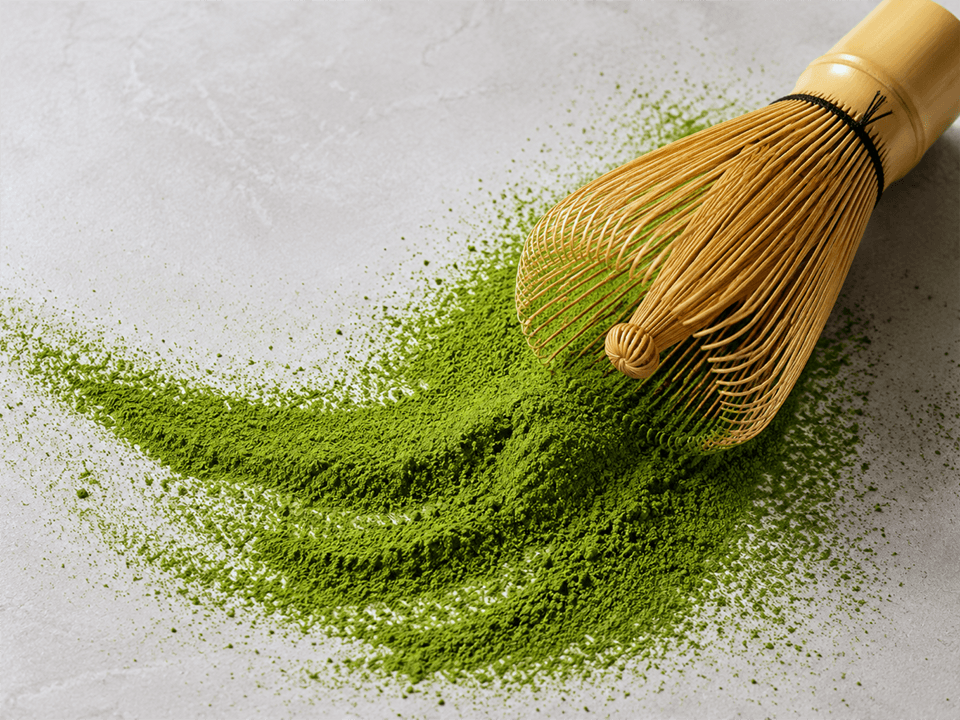
Fresh matcha has a combination of qualities that buyers and consumers notice immediately: a recognizable green color, a clean tea aroma, balanced flavor and a fine powder that disperses easily.
Those qualities are not permanent.
Once matcha has been ground into a fine powder, a large surface area is exposed to the surrounding environment. Heat, light, oxygen, humidity and repeated opening can gradually change its color, aroma, flavor and chemical composition.
For a home user, poor storage may mean that a small tin loses freshness before it is finished.
For a café, the problem can appear as inconsistent lattes between the beginning and end of a large bag. For a distributor, it may involve months of warehouse storage. For a private label brand, packaging and shelf-life decisions can determine whether the product that reaches the customer still resembles the matcha originally approved during development.
Good matcha storage therefore involves more than putting the powder in a refrigerator.
The practical goal is to control five things:
temperature, oxygen, light, moisture and time.
Research supports the importance of these factors. A controlled matcha study found that higher storage temperatures and longer storage periods were associated with reductions in measured brightness, greenness, phenolic compounds and catechins. More recent 2026 research found that higher water activity and light exposure accelerated degradation of several matcha compounds during storage.
The best storage system is the one that protects the powder while remaining practical for the way it is actually used.
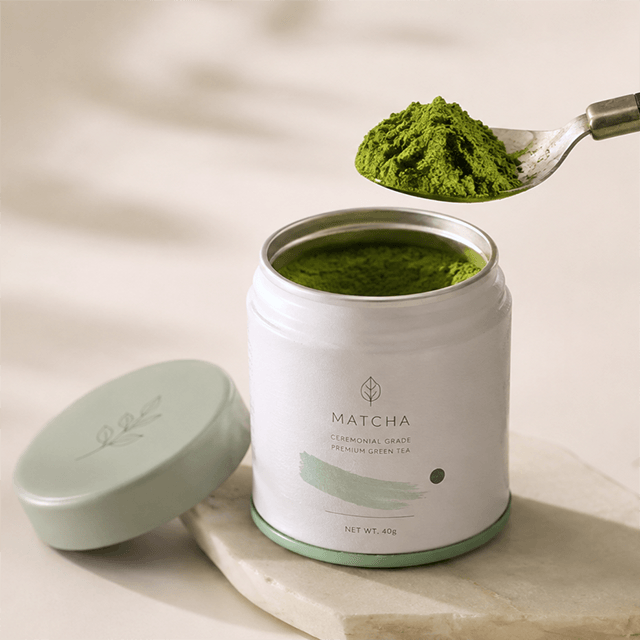
Why Matcha Is Sensitive to Storage
Matcha behaves differently from whole-leaf tea.
When tea remains in larger leaf pieces, much of the material is still protected inside the leaf structure. Matcha has already been ground into an extremely fine powder, creating much more exposed surface area relative to its weight.
That makes environmental control particularly important.
Matcha also contains chlorophyll pigments that contribute to its characteristic green appearance. Analytical research on green teas has identified both chlorophylls and degradation products such as pheophytins and oxidized chlorophyll derivatives, with the balance influenced by processing and storage conditions.
At the same time, aroma compounds are sensitive to environmental exposure. A product can therefore lose perceived freshness before the powder becomes obviously brown.
The result is that storage deterioration does not have one universal visual signal.
Some matcha first loses aroma. Another sample becomes duller in color. Another develops flatter flavor or stronger stale notes. Powder stored in humid conditions may also begin to clump even when its color still appears acceptable.
The Five Main Enemies of Matcha Freshness
Matcha Storage Risks at a Glance
| Storage Factor | What Can Happen | Typical Cause | Practical Control |
|---|---|---|---|
| Heat | Faster color, aroma and compound deterioration | Warm warehouse, hot kitchen, long transport exposure | Keep inventory in a cool, stable environment |
| Oxygen | Oxidative changes and loss of fresh character | Repeated opening, large headspace, poorly sealed packaging | Use airtight packaging and smaller working quantities |
| Light | Pigment and compound degradation | Clear jars, sunlight, strong retail lighting | Use opaque or high light-barrier packaging |
| Moisture | Clumping and accelerated deterioration | Humid air, condensation, wet utensils | Keep packages sealed and use dry handling procedures |
| Time | Cumulative quality loss | Slow inventory turnover or oversized packs | Use realistic pack sizes and stock rotation |
These factors often work together rather than independently.
A large transparent jar beside a café espresso machine, for example, may expose matcha simultaneously to heat, light, humidity and fresh oxygen every time the lid is opened.
Changing only one factor may not completely solve the problem.
1. Heat: Why Storage Temperature Matters
Temperature influences the rate of many chemical reactions.
A 2020 controlled study stored matcha under different temperature conditions for two months. As storage temperature and duration increased, measured brightness and green-color indicators decreased. Total phenolic and flavonoid content also declined, as did several catechins and other measured compounds.
The study does not create one universal storage temperature for every commercial matcha product. Packaging, initial condition, humidity and storage duration also matter.
It does show why prolonged exposure to warm conditions should be avoided.
Avoid Unnecessarily Warm Storage Areas
A café should not store the primary matcha supply directly beside an oven, dishwasher, steam wand or window exposed to strong sun.
A warehouse should consider seasonal temperature conditions rather than assuming that a dry room is automatically suitable.
For international buyers, transport is also part of storage history.
A product may spend days or weeks in warehouses, ports, trucks and containers before reaching the final customer. The conditions during this period can affect quality even if the buyer stores the powder correctly afterward.
Temperature Stability Also Matters
Repeated temperature changes can create additional handling problems.
Moving a large matcha bag repeatedly between a cold environment and a warm, humid production room can increase the risk of condensation when the cold package is opened.
For businesses, it is usually better to separate reserve inventory from active working stock.
The reserve can remain protected under its designated storage conditions while a smaller quantity is used for daily production.
2. Oxygen: Why Airtight Storage Matters
Every time a matcha package is opened, the environment inside the package changes.
Fresh air enters, and the amount of oxygen in contact with the remaining powder increases.
Research on green tea products has connected oxidative reactions with changes in color and tea components during storage. Matcha color research also identifies oxygen exposure as one of the environmental factors relevant to chlorophyll stability.
This is why simply folding over the top of an open bag is not an ideal long-term storage method.
Reduce Repeated Exposure
A 5 kg bag can appear cheaper and more convenient than five 1 kg inner bags.
But the better commercial format depends on consumption speed.
A manufacturer using all 5 kg during one production run may benefit from the larger format.
A café using only 150 grams per week would repeatedly open the same large bag for many weeks. In that situation, smaller sealed inner packs may provide better practical protection for the unused inventory.
Bulk buyers should therefore compare cost per kilogram together with time after opening.
Headspace Matters Too
As a package becomes emptier, a larger proportion of its internal volume may contain air.
Transferring a small remaining quantity into a suitable smaller airtight container can reduce unnecessary headspace during active use.
However, every transfer also creates another handling step.
The new container should be clean, dry, odor-free and designed for food contact. The powder should not be transferred repeatedly from one container to another without a clear operational reason.
3. Light: Why Clear Containers Can Be a Problem
The bright green color of matcha makes transparent packaging attractive.
Unfortunately, the same transparency that allows customers to see the powder can increase light exposure.
A 2026 study evaluated matcha under different water activity levels and either light-shielded conditions or continuous laboratory light exposure. Greater light exposure, particularly when combined with higher water activity, accelerated degradation of several measured compounds.
Research on refrigerated ready-to-drink green tea has also demonstrated that packaging and light exposure can influence both catechin retention and color change during storage.
Opaque Packaging Is Usually More Protective
The Japanese Ministry of Agriculture, Forestry and Fisheries recommends protecting tea from moisture, sunlight, heat and odors. Its guidance advises storing tea in a sealed, non-transparent container in a cool, dark location after opening.
For matcha, high-barrier pouches, opaque containers and tins with appropriate inner protection are therefore more logical than decorative clear jars when long-term quality is the priority.
This does not mean every transparent container immediately damages matcha.
Exposure intensity and duration matter.
A small service jar emptied during one café shift presents a very different situation from a clear retail package sitting under display lighting for several months.
4. Moisture: The Hidden Storage Problem
Matcha is a dry powder, and keeping it dry is fundamental to maintaining handling quality.
Humidity can enter every time the package is opened.
A 2026 Food Chemistry study found that increasing water activity significantly affected matcha during storage. Higher water activity was associated with structural changes and faster losses in several measured polyphenol, flavonoid and catechin-related parameters, particularly when combined with light exposure. The researchers found better retention under low-water-activity and light-shielded conditions within the experiment.
For real businesses, water activity is not normally measured every time a café opens a matcha bag.
The practical lesson is simpler:
keep the powder dry and prevent unnecessary exposure to humid air.
Never Use Wet Utensils
A small amount of water introduced directly into a powder container can create localized clumping.
Scoops, spoons and containers should therefore be completely dry before contacting matcha.
This is especially relevant in café environments, where steam, rinsing stations and wet bar tools are common.
Watch Humidity Around Espresso Equipment
A convenient location is not always a suitable storage location.
Placing matcha immediately beside an espresso machine may expose the active container to repeated heat and steam.
A better service workflow keeps only the amount required for active use near the preparation area while reserve inventory remains sealed elsewhere.
5. Time: Freshness Is a Management Issue
Even excellent packaging cannot stop time completely.
Storage protection slows deterioration; it does not permanently freeze the original condition of the powder.
This is why a shelf-life date should not be confused with a guarantee that matcha tastes identical from the first day to the final day.
Commercial shelf life normally represents an approved period under defined storage conditions and packaging.
The exact period depends on the supplier, production method, packaging structure and quality criteria.
Businesses should therefore follow the date and storage instructions specified for the actual product rather than applying one universal rule found online.
Does Matcha Need to Be Refrigerated?
This is one of the most common matcha storage questions.
The answer depends on whether the product is sealed reserve inventory or opened active stock, and on the surrounding environment.
Japanese MAFF guidance states that tea should be protected from moisture, sunlight, heat and odors and kept in a sealed, opaque container in a cool, dark place. The guidance also notes that refrigeration can be used, with care to prevent odor transfer.
Cooler temperatures can slow quality changes, which is consistent with controlled research showing faster matcha deterioration at higher storage temperatures.
However, refrigeration creates another practical risk:
condensation.
A cold package opened immediately in a warm, humid room can collect moisture from the surrounding air.
That is why the storage procedure matters as much as the storage temperature.
How to Refrigerate Matcha Correctly
For sealed inventory, refrigeration can be useful when the supplier’s storage specifications permit it and when the packaging provides adequate moisture and odor protection.
The package should remain fully sealed.
Before opening a cold package, allow the sealed package to move toward room temperature first. MAFF gives similar guidance for frozen unopened tea: the package should be allowed to warm before opening to reduce deterioration associated with condensation.
Do not repeatedly open the same cold package, use a little powder, and immediately return it to the refrigerator.
That repeated cold-to-warm cycle can create unnecessary operational complexity.
For cafés and production facilities, a better method is usually to remove a smaller sealed working pack while leaving the remaining reserve stock protected.
Can You Freeze Matcha?
Freezing can be useful for sealed reserve inventory, but it should not be treated as a universal requirement for every matcha purchase.
MAFF’s tea storage guidance states that unopened tea can be kept in the freezer and emphasizes that it should be brought toward room temperature before opening to avoid condensation-related quality problems.
For commercial buyers, freezing makes the most sense when inventory will remain unused for a longer period and when the packaging is suitable for that storage condition.
The product specification and supplier recommendation should take priority.
Once the package has entered normal daily use, repeatedly freezing and thawing the same container is generally less practical than maintaining smaller working packs.
Refrigerator vs Freezer vs Cool Dark Storage
The choice should reflect usage frequency.
Matcha Storage by Situation
| Situation | Practical Storage Approach | Main Concern | Recommended Handling Logic |
|---|---|---|---|
| Unopened small retail pack | Cool, dark storage or refrigeration according to product instructions | Heat, light and long storage | Keep original seal intact |
| Opened home-use pack | Airtight, opaque and protected from heat and humidity | Repeated exposure | Use promptly and minimize opening time |
| Café working stock | Small airtight active container or small original pack | Steam, heat and frequent opening | Keep only short-term working quantity near the bar |
| Café reserve stock | Sealed packs stored under supplier-recommended conditions | Slow turnover | Separate reserve from working inventory |
| Bulk manufacturing stock | Original sealed high-barrier inner bags | Warehouse temperature and long storage | Use FIFO/FEFO and open one unit at a time |
| Long-term unopened inventory | Refrigerated or frozen where appropriate for the product | Condensation and odor transfer | Keep sealed until temperature equilibrates before opening |
| Retail finished product | Validated light-, oxygen- and moisture-barrier packaging | Customer storage and shelf life | Give clear package storage instructions |
| RTD matcha beverage | Product-specific refrigerated or ambient storage | Microbiology, light, oxygen and formulation | Follow validated finished-product shelf life |
There is no advantage in creating a complicated cold-storage system if packages are used so quickly that a cool, dry, dark environment already protects them adequately.
Likewise, a business should not leave slow-moving premium inventory in a warm storeroom simply because the bags remain unopened.
How Long Does Matcha Last?
There is no scientifically universal answer such as “matcha always lasts 30 days after opening.”
Different matcha products have different packaging, moisture levels, production dates, storage histories and acceptance criteria.
The printed best-before or shelf-life date should therefore be considered together with the manufacturer’s specified storage conditions.
MAFF recommends using tea promptly after opening rather than treating the unopened shelf-life date as the expected freshness period after repeated exposure.
This distinction is important.
Shelf Life Is Not the Same as Peak Freshness
A product may remain within its established shelf-life specification while losing some of the aroma and bright sensory character that customers associate with newly opened matcha.
For a premium drinking matcha, this difference may be noticeable earlier.
For matcha used in a strongly flavored bakery formulation, small sensory changes in the raw powder may be less visible in the finished product.
Commercial buyers should therefore establish an internal use period after opening based on actual application testing rather than copying a number from another brand.
What Happens After Matcha Is Opened?
Opening changes the storage environment immediately.
The original package may have been vacuum sealed, nitrogen flushed or otherwise protected from atmospheric conditions. Once the seal is broken, the powder begins interacting with normal air.
Every subsequent opening adds another exposure cycle.
This does not mean matcha becomes poor quality overnight.
It means that the business should manage the opened product differently from reserve inventory.
The active pack should remain closed whenever powder is not being measured. Utensils should stay clean and dry, and opening time should be kept practical.
A café should avoid leaving the entire bag open throughout service simply because it is used frequently.
Should Matcha Stay in Its Original Packaging?
Often, yes.
A good commercial matcha package is designed to protect the powder from environmental exposure.
If the original pouch has a strong barrier structure and reliable resealable closure, retaining the powder inside that package avoids unnecessary transfer.
For service convenience, the original package may also be placed inside a rigid opaque container.
This gives the business the physical protection of a tin or food bin while keeping the powder inside its primary packaging.
When transferring matcha is necessary, the replacement container should provide similar protection from air, light, moisture and odors.
A decorative bamboo box or glass jar may look attractive but should not be assumed to provide equivalent barrier performance.
Does Matcha Absorb Odors?
Tea aroma is delicate, and storage guidance from MAFF specifically warns about exposure to odors. When tea is refrigerated, it recommends preventing contact with the smells of other foods.
Matcha should therefore not be stored loosely beside strongly aromatic ingredients.
This is particularly relevant in restaurant refrigerators containing onions, spices, cooked foods, sauces or other odor-intensive products.
A sealed high-barrier package provides much better protection than a loosely closed container.
Why Packaging Structure Matters
A pouch is not automatically protective simply because it looks metallic.
Barrier performance comes from the complete material structure.
MAFF specifically distinguishes aluminum packaging used to block light and air from superficially similar metallized packaging that may not provide the same light protection.
For bulk and private label buyers, packaging specifications deserve the same attention as visual design.
A suitable package should control the environmental factors relevant to the product: oxygen transmission, water-vapor transmission, light exposure and seal integrity.
The importance of each property depends on product size, expected shelf life and use pattern.
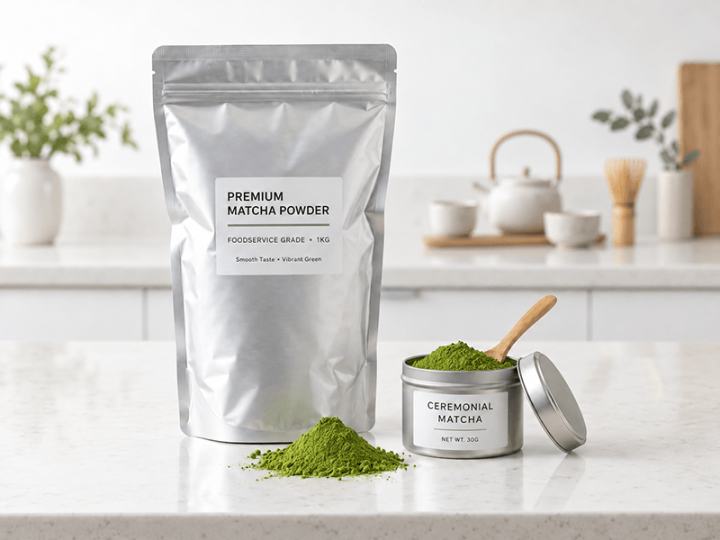
Tin vs Pouch: Which Is Better for Matcha?
Neither format is automatically superior.
A well-designed high-barrier pouch may protect matcha extremely well while minimizing packaging weight.
A metal tin provides excellent opacity and physical protection, but the practical barrier after opening still depends on its lid, inner seal and how often it is opened.
Some premium retail products use both:
a sealed inner pouch protects the powder during distribution, while the outer tin provides presentation and secondary protection during use.
For bulk matcha, high-barrier inner bags inside shipping cartons are generally more practical than oversized tins.
Packaging should follow the distribution system rather than aesthetics alone.
Why Pack Size Can Matter More Than Package Type
Imagine two cafés that each purchase 5 kg of matcha.
Café A uses 5 kg every week.
Café B uses 5 kg every two months.
The same pack size does not create the same storage risk.
Café A may be able to open one large pack and use it quickly.
Café B may benefit from several smaller sealed inner packs, even when the price per kilogram is slightly higher.
For commercial buyers, the appropriate package size is therefore related to:
quantity opened ÷ rate of use = exposure period
The shorter the realistic exposure period, the easier it becomes to maintain consistency.
How Cafés Should Store Matcha
Café storage should be designed around workflow.
Keeping the main inventory beside the espresso machine may save a few seconds but can expose the powder to a less favorable environment.
A practical system separates daily working stock from reserve stock.
Only enough powder for a short operating period needs to be available at the preparation station. Remaining inventory can stay sealed under more controlled conditions.
The working container should be opaque or kept away from direct light, remain tightly closed between uses and be handled with a dry measuring tool.
When refilling, staff should avoid repeatedly mixing old residual powder with newly opened product without a stock-rotation system.
This makes it easier to trace changes in flavor or color to a specific pack or batch.
Matcha Storage for Café Chains
A café chain has an additional challenge: consistency across locations.
One store may use 2 kg per week, while another uses only 500 grams. Sending both locations the same large pack may create very different freshness at the end of the package.
Central purchasing should therefore examine store-level consumption rather than total network demand alone.
Pack size, delivery frequency and stock levels can then be adjusted accordingly.
Storage instructions should become part of the operational recipe.
The same brand standard used for matcha dosage, milk volume and mixing method should define how the powder is stored after opening.
Matcha Storage for Food Manufacturers
Industrial buyers usually consume larger amounts per production run.
That changes the ideal packaging strategy.
A 5 kg inner bag can be highly practical when the entire bag enters one production batch. The production team avoids prolonged open-pack storage and can maintain clear lot traceability.
Larger 10 kg or 20 kg units may be appropriate only when production volume supports rapid use after opening.
The manufacturer should record the supplier batch number, opening date and remaining material.
Partially used bags should be resealed according to an established procedure rather than left folded inside an outer carton.
Matcha Storage for Distributors and Importers
Distributors face a different problem: time.
Their matcha may remain in inventory longer than a café’s.
Warehouse temperature, humidity, stock rotation and transport conditions therefore become more important.
The distributor should use a clear FEFO approach—first expired, first out—when products have defined shelf-life dates, while also tracking production or packing dates where relevant.
Older inventory should not remain behind new deliveries simply because the cartons are physically harder to reach.
Seasonal demand should also be considered.
A distributor importing large summer volumes for iced matcha demand may need a different stock plan from one serving consistent year-round industrial customers.
Matcha Storage During International Shipping
Storage planning should begin before the matcha reaches the destination warehouse.
International shipments can pass through several climate zones.
Air freight generally reduces transit time, while sea freight can expose products to a much longer logistics period. Neither method alone determines final quality; packaging, route, season, container conditions and handling all matter.
Bulk matcha intended for long-distance transportation should remain sealed in appropriate high-barrier packaging throughout transit.
Buyers concerned about temperature exposure can use temperature loggers during selected trial shipments to understand actual conditions rather than relying only on theoretical shipping times.
This can be especially useful when investigating unexplained differences between a pre-shipment sample and arrived goods.
Do Not Open Cold Matcha Immediately
This deserves special emphasis because it is one of the easiest storage mistakes to avoid.
Suppose a sealed matcha bag has been stored in a refrigerator or freezer.
The package itself is cold.
If it is opened immediately in warm, humid air, the cold powder and internal surfaces may encourage moisture condensation.
MAFF specifically advises allowing frozen tea to approach room temperature before opening so that condensation does not negatively affect the tea.
The key point is:
warm the sealed package, not the exposed powder.
Leave the barrier intact while the temperature equilibrates.
Only then open the package.
Should Opened Matcha Be Put Back in the Refrigerator Every Day?
There is no one procedure that suits every business.
A tightly sealed small retail container may be refrigerated successfully when humidity, odors and condensation are well controlled.
For a busy café opening the container dozens of times per day, repeated movement between a cold refrigerator and a warm bar may be less practical.
The better solution may be to maintain a small working quantity in an appropriate environment and keep reserve stock sealed and cold.
The decision should be made according to usage speed and operating conditions rather than an internet rule saying all opened matcha must or must not be refrigerated.
How to Tell Whether Stored Matcha Has Lost Quality
Matcha does not require a laboratory test every time a package is opened.
A controlled sensory comparison can reveal meaningful changes.
Compare the current powder with the approved product standard for dry color, aroma and prepared flavor. Notice whether the fresh green has become noticeably duller, whether the aroma has weakened or become stale, and whether the prepared matcha tastes flatter or significantly harsher than expected.
Clumping should also be investigated, particularly when it suggests unexpected moisture exposure.
However, visual and sensory observations are quality checks, not food-safety clearance.
Matcha that appears green is not automatically safe, and a color change alone does not prove that the product is unsafe.
Commercial acceptance should follow the supplier specification and the buyer’s food-safety procedures.
Build a Simple Matcha Storage SOP
For B2B buyers, storage should not depend on individual staff memory.
A short written SOP can define where reserve inventory is stored, which package is currently open, how the active container is handled, how cold inventory is tempered before opening and how partial bags are resealed.
Example Commercial Matcha Storage SOP
| Control Point | Suggested Business Practice | What to Record |
|---|---|---|
| Receiving | Check carton and inner packaging condition | Date, supplier, product code and batch |
| Reserve storage | Follow supplier-specified temperature in a dark, dry environment | Storage location |
| Stock rotation | Use the earliest appropriate expiry first | Best-before / expiry and batch |
| Opening | Open one working unit at a time | Opening date |
| Daily handling | Keep closed between uses and use dry utensils | Staff procedure |
| Cold inventory | Allow sealed package to temper before opening | Transfer date where needed |
| Partial bulk bag | Reseal immediately using validated method | Remaining quantity |
| Incoming comparison | Check color, aroma and application performance | Any significant deviation |
| Disposal / hold | Isolate material outside internal quality standard | Reason and batch number |
The SOP does not need to be complex.
Its value comes from consistency.
If one location refrigerates open bags, another stores them beside a coffee machine and a third leaves them in transparent countertop jars, the business cannot reasonably expect identical results.
Establish an Internal “After Opening” Standard
The supplier can provide a shelf-life date, but commercial users should also determine how long an opened pack remains suitable under their own operating conditions.
This can be evaluated experimentally.
Open a normal production pack and use it according to the planned storage procedure. At defined intervals, compare the powder and final product with a freshly opened reference.
For cafés, the evaluation should use the standard latte recipe rather than dry powder alone.
For manufacturers, the material should be tested in the actual food formula.
The business can then set an internal operating limit based on observable performance.
This is more defensible than declaring that all matcha must be discarded exactly 30 or 60 days after opening regardless of packaging, application and storage conditions.
Matcha Storage and Color Stability
Storage and color are closely related, but they are not exactly the same topic.
A loss of green color can be one visible sign of storage-related change.
Higher temperature and time have been shown to reduce matcha greenness in controlled testing, while light, moisture and pigment degradation pathways also contribute to color changes.
However, a matcha may lose aroma before a major visual difference appears.
That is why businesses should evaluate color, aroma and finished-product flavor together.
For a deeper discussion of pigment degradation, heat, acidity and oxidation in beverages and foods, the separate guide Why Matcha Turns Brown: 7 Critical Factors Affecting Color should address the formulation side of the problem.
Storage Cannot Fix a Poor Starting Product
A good storage system protects the quality that already exists.
It cannot transform an old, dull or poorly processed powder into premium matcha.
When evaluating commercial samples, buyers should therefore judge the product first and storage second.
The approved sample should have the required color, flavor and application performance when fresh.
Storage testing then determines how effectively those characteristics can be maintained through the expected commercial period.
Packaging Should Be Part of Sample Approval
Private label buyers often approve the matcha first and choose packaging later.
That sequence can create problems.
A product intended for six or twelve months of retail distribution may need stronger protection than the first attractive pouch design provides.
Packaging should therefore be considered during development.
The team can fill the approved matcha into candidate packaging materials and compare stored samples under realistic conditions.
For high-volume projects, oxygen- and water-vapor-transmission data can also help evaluate packaging options, although laboratory material specifications still need to be interpreted together with seals, closures and production quality.
Do Not Set Shelf Life from Packaging Claims Alone
A supplier may state that a high-barrier material has excellent oxygen or moisture protection.
That information is useful, but it does not independently prove the finished product’s shelf life.
Shelf life depends on the actual matcha, filling conditions, residual oxygen, seal integrity, storage environment and acceptance criteria.
Private label brands should therefore avoid selecting a shelf-life date simply because the packaging vendor says the pouch is suitable for tea.
Product-specific evidence remains more important.
What About Nitrogen-Flushed Matcha?
Some matcha packaging systems reduce oxygen in the package by replacing part of the internal atmosphere with nitrogen.
This can help reduce oxygen exposure before opening when the filling and sealing process is properly controlled.
However, nitrogen flushing does not make the product immune to heat, light, moisture or long storage.
Once the consumer or café opens the package, normal air enters again.
Nitrogen flushing should therefore be viewed as one part of packaging protection rather than a substitute for proper storage.
Common Matcha Storage Mistakes
Leaving Matcha in a Transparent Jar
Clear containers display the powder beautifully but provide little protection from light.
For short-term café presentation this may be manageable, but they are not the strongest option for reserve storage.
Keeping the Main Supply Beside a Coffee Machine
Heat and humidity around beverage equipment can create a poor environment for long-term working stock.
Only the amount needed for short-term service should be kept near the preparation area.
Opening a Cold Pack Immediately
The problem is not refrigeration itself.
The problem is exposing a cold product to warm humid air before the sealed package has had time to equilibrate.
Using Wet Spoons
Even small amounts of water introduced into the powder can create localized moisture problems and clumping.
Buying Oversized Packs to Save Money
A lower price per kilogram can become a poor commercial decision when the same bag remains open for too long and product quality becomes inconsistent.
Leaving Bulk Bags Folded but Unsealed
Folding the top may reduce gross exposure, but it is not equivalent to restoring a proper barrier seal.
Ignoring Odors in Cold Storage
A refrigerator may provide a useful temperature environment while simultaneously exposing poorly sealed matcha to strong food odors.
Treating the Best-Before Date as an After-Opening Guarantee
The printed date generally assumes defined product and storage conditions.
Repeatedly opened product should be managed according to its real use environment.
Frequently Asked Questions
How Should Matcha Be Stored?
Matcha should be protected from heat, oxygen, light, moisture and strong odors.
A tightly sealed, opaque or high-barrier package in a cool, dark environment is a practical foundation. Storage should also follow the instructions provided for the actual product.
Does Matcha Need to Be Refrigerated?
Not every matcha must be refrigerated in every situation.
Cool storage can help slow quality deterioration, but refrigeration should be balanced against condensation, odor exposure and operating practicality.
Sealed reserve inventory and frequently opened working stock may require different approaches.
Should Opened Matcha Be Refrigerated?
Opened matcha can be refrigerated when it remains tightly sealed and protected from humidity and odors.
For high-frequency café use, a small active working quantity combined with sealed refrigerated reserve stock may be easier to control.
Can You Freeze Matcha?
Unopened matcha or tea can be frozen when suitable packaging and product instructions allow it.
MAFF recommends allowing the sealed package to return toward room temperature before opening in order to reduce condensation risk.
Should Matcha Be Stored in the Freezer After Opening?
Repeatedly freezing and warming the same open container is usually less convenient than dividing inventory into smaller sealed packs.
Long-term reserve inventory and daily working stock should be managed separately.
How Long Does Matcha Last After Opening?
There is no universal number that applies to every matcha.
Packaging, temperature, humidity, opening frequency and product quality all affect the result. Follow the supplier’s instructions and use opened matcha promptly while establishing an internal standard for commercial applications.
Does Matcha Expire?
Commercial matcha should carry the applicable durability or shelf-life information required for its market and product.
The date does not mean quality remains completely unchanged throughout storage, and the specified storage conditions still matter.
Can Old Matcha Still Be Green?
Yes.
Visible color is only one quality indicator. Aroma and flavor may change even when the powder remains relatively green.
Why Does Matcha Become Dull in Storage?
Temperature, oxygen, light, moisture and storage time can contribute to changes in matcha pigments and other compounds.
Higher storage temperatures have been associated with declining greenness in controlled research.
Is a Glass Jar Good for Matcha?
A tightly closed glass jar may limit moisture and air exchange, but transparent glass does not provide strong light protection.
An opaque container or light-protected storage location is preferable for longer storage.
Is a Tin Good for Matcha?
A tin can provide strong light protection and physical durability.
The quality of the closure and inner packaging still determines how well it controls air and moisture.
Are Pouches Good for Matcha?
High-barrier pouches can be very effective.
Buyers should evaluate the actual material structure, seals and closure rather than judging performance from appearance alone.
Should Matcha Be Vacuum Sealed?
Reducing oxygen exposure before opening can support storage quality.
The appropriate packing method depends on the producer and packaging system. Vacuum sealing is not a substitute for protection from heat, light and moisture.
Does Matcha Absorb Smells?
Tea should be protected from strong odors, particularly during refrigerated storage. MAFF specifically advises preventing tea from coming into contact with odors from other foods.
Why Does Matcha Clump After Storage?
Some clumping can occur naturally in fine powder, but increased or hard clumping can indicate humidity or moisture exposure.
The storage and handling conditions should be reviewed.
What Is the Best Matcha Storage Method for a Café?
Separate reserve stock from working stock.
Keep reserve inventory sealed under appropriate storage conditions, use small working quantities, protect the active powder from heat and humidity and record opening dates.
What Is the Best Pack Size for a Café?
The appropriate pack size depends on consumption speed.
A pack that is consumed relatively quickly after opening may provide better consistency than a larger package that remains open for an extended period.
How Should Bulk Matcha Be Stored?
Keep bulk matcha in its sealed original barrier packaging under the supplier’s specified storage conditions.
Open one inner unit at a time, reseal partially used material correctly and maintain clear batch and stock-rotation records.
Final Thoughts
The best matcha storage strategy is not simply “put it in the fridge.”
Storage quality comes from managing the complete environment.
Matcha should be protected from excessive heat, repeated oxygen exposure, direct light, humidity and unnecessary time after opening. Research shows that temperature, light and moisture conditions can meaningfully influence matcha color and the stability of measured tea compounds during storage.
For home users, this usually means keeping matcha tightly sealed, protected from light and using it while it is still fresh.
For cafés, the most important improvement may be separating working stock from reserve inventory.
For manufacturers and distributors, packaging structure, warehouse conditions, stock rotation and logistics become increasingly important.
For private label brands, storage should be considered before the package design and shelf-life date are finalized.
There is no single container, temperature or number of days that guarantees perfect matcha in every situation.
The correct system depends on how much product is purchased, how quickly it is used, how it is packaged and what level of color, aroma and flavor the finished product needs to maintain.
The objective is straightforward:
protect the matcha from unnecessary exposure from the moment it is packed until the moment it is used.
Plan Matcha Storage and Packaging with TangMist
TangMist supplies bulk matcha powder for cafés, beverage brands, food manufacturers, distributors and private label projects.
Matcha can be evaluated not only for initial flavor and color but also for the way it will be packed, transported, stored and consumed in the final commercial application.
For café and foodservice projects, packaging quantities can be considered alongside weekly usage so that open packs do not remain in service unnecessarily long.
For bulk and private label projects, buyers can discuss inner-pack formats, outer cartons, storage requirements, product specifications and batch documentation as part of the purchasing process.
Request Matcha Samples for Commercial Testing
Provide the intended application, expected monthly consumption, pack size, destination market, storage environment and estimated order quantity when requesting samples.
Contact TangMist to compare matcha options and develop a bulk or private label supply format that protects color, freshness and flavor throughout commercial use.