Choosing the right matcha grade is not simply a matter of buying the brightest powder or selecting the most premium-sounding name.
The matcha must work inside a finished product.
A powder intended for drinking with water may need a smooth flavor and clean finish. Matcha used in an oat milk latte needs enough strength to remain noticeable after dilution. A bakery product may require stronger color and flavor after heating, while matcha used in chocolate must balance sweetness, cocoa butter and a dense texture.
The best grade is therefore not always the highest-priced option. It is the grade that achieves the intended color, flavor, texture and product positioning at a commercially practical dosage.
This guide explains how cafés, beverage brands, food manufacturers, distributors and private label businesses can select a matcha grade according to the complete application rather than relying on the grade name alone.
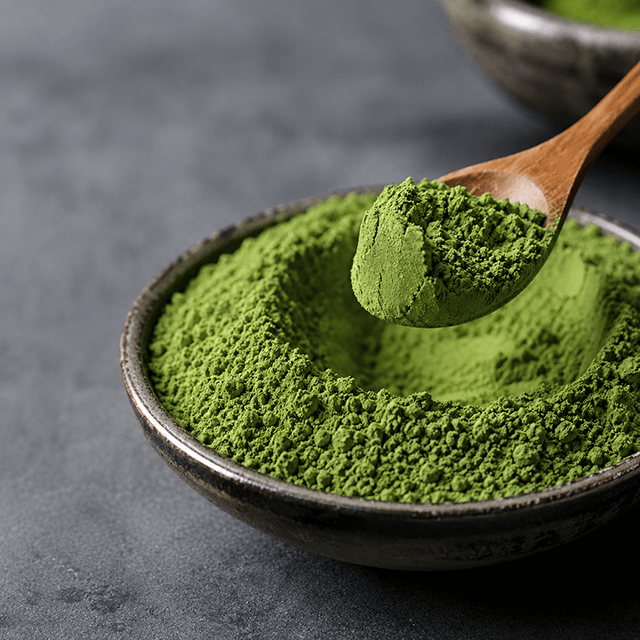
Why Matcha Grade Selection Matters for B2B Buyers
The wrong matcha grade can create problems across your whole product development process.
For example, a very premium matcha may taste excellent when whisked with water, but it may not be cost-effective for bakery production. A lower-cost culinary grade may work well in cookies or cakes, but it may look dull in a premium latte product. A grade that performs well in hot drinks may not always be ideal for RTD beverages, smoothie powders, or functional blends.
For B2B buyers, choosing the right matcha grade affects:
– Product taste and color
– Cost per serving
– Customer perception
– Label positioning
– Shelf appearance
– Repeat purchase rate
– MOQ and bulk pricing
– Private label feasibility
– Product consistency across batches
A good supplier should not simply ask, “What grade do you want?” A better supplier will ask, “What product are you making, what market are you selling to, and what price point do you need?”
Understanding Matcha Grades in a Business Context
Matcha grades are often described as ceremonial, premium, latte, culinary, or ingredient grade. However, these names are not always standardized across suppliers. One supplier’s “premium grade” may be similar to another supplier’s “latte grade.”
That is why B2B buyers should evaluate matcha based on practical specifications instead of relying only on grade names.
Ceremonial Grade Matcha
Ceremonial grade matcha is usually selected for direct drinking, traditional preparation, high-end retail tins, premium cafés, and wellness-focused brands.
It typically has:
– Brighter green color
– Smoother taste
– Lower bitterness
– Finer texture
– More delicate aroma
– Better performance in water-based preparation
This grade is suitable when the matcha itself is the main selling point.
Common applications include:
– Traditional whisked matcha
– Premium matcha latte
– Retail matcha tins
– High-end café menus
– Wellness gift sets
– Premium private label products
However, ceremonial grade is not always the best choice for every business. If your product contains sugar, milk powder, flavoring, protein, collagen, or other strong ingredients, a more application-focused grade may be more cost-effective.
Premium / Latte Grade Matcha
Premium or latte grade matcha is often the best option for cafés, beverage chains, milk tea shops, and brands developing matcha drink products.
It usually offers a strong balance between:
– Color
– Taste
– Cost
– Foam performance
– Milk compatibility
– Customer acceptance
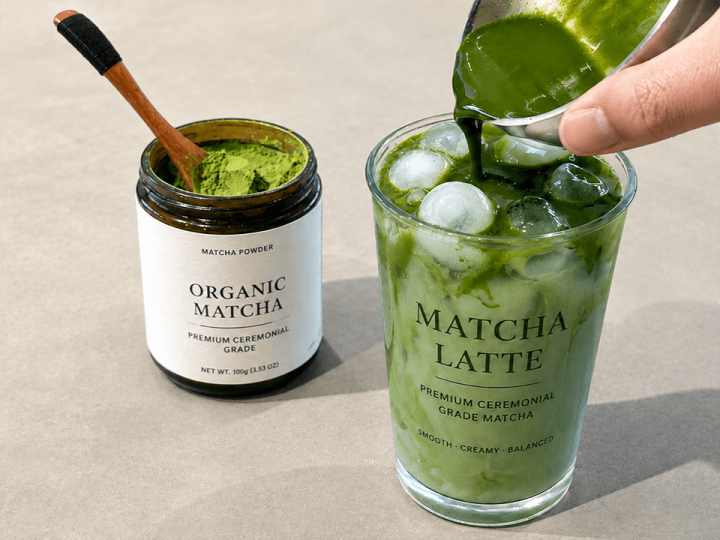
For latte applications, the matcha must remain visible and flavorful after being mixed with milk, oat milk, soy milk, cream, or sweeteners. A matcha that tastes smooth in water may become too weak in a milk-based beverage.
Culinary Grade Matcha
Culinary grade matcha is generally used for food manufacturing, baking, confectionery, ice cream, chocolate, snack products, and blended powders.
It is designed for applications where matcha is one ingredient among many.
Common applications include:
– Cakes and cookies
– Matcha chocolate
– Ice cream
– Bakery fillings
– Protein powder blends
– Smoothie mixes
– Functional food powders
– Instant drink mixes
– Energy or wellness blends
Culinary grade matcha may have a stronger, slightly more bitter flavor, which can be useful in food products because the matcha must remain noticeable after processing.
Organic Matcha Grade
Organic matcha is selected when the final product needs organic positioning, clean label appeal, or access to specific retail channels.
Organic matcha is especially relevant for:
– Organic food brands
– Wellness brands
– Natural product retailers
– Premium e-commerce brands
– Supplement and functional food companies
– EU and North American clean label markets
Organic matcha usually requires supporting documentation such as organic certificates, COA, pesticide testing, and export documents.
Matcha Grade Selection by Application
For Cafés and Coffee Shops
Cafés usually need matcha that performs well in both hot and iced drinks.
Important factors include:
– Bright green color in milk
– Smooth taste
– Good suspension
– Low bitterness
– Consistent foam
– Stable flavor across batches
Best fit:
– Premium grade
– Latte grade
– Higher culinary grade for cost-sensitive menus
For Beverage Brands
Beverage brands need to test matcha in the actual product system. Matcha behaves differently in bottled drinks, instant powders, milk tea, smoothies, and functional beverages.
Key considerations include:
– Solubility and suspension
– Color stability
– Flavor strength
– Compatibility with sweeteners and milk
– Processing temperature
– Shelf life expectations
Best fit:
– Latte grade
– Premium culinary grade
– Organic grade for clean label positioning
For Food Manufacturers
Food manufacturers often need matcha that can survive processing, mixing, baking, freezing, or heating.
Best fit:
– Culinary grade
– Food manufacturing grade
– Organic culinary grade for premium food brands
For Private Label Matcha Brands
Private label brands should choose matcha based on market positioning.
For example:
- Premium retail tin: ceremonial or premium grade
- Daily latte powder: latte grade
- Affordable e-commerce product: standard premium grade
- Organic wellness brand: certified organic matcha
- Functional blend: culinary or premium culinary grade
Private label buyers also need to consider packaging style, label claims, COA availability, MOQ, and repeat supply consistency.
Matcha Grade Comparison Table
| Application | Recommended Grade | Key Buying Priority | What to Test Before Ordering |
|---|---|---|---|
| Traditional drinking | Ceremonial grade | Smooth taste, bright color, fine texture | Whisking, aroma, bitterness, mouthfeel |
| Café latte | Premium / latte grade | Color in milk, taste balance, foam | Hot latte, iced latte, oat milk latte |
| Bubble tea / milk tea | Latte grade / culinary premium | Strong flavor, cost control | Milk compatibility, sweetness balance |
| Bakery products | Culinary grade | Heat resistance, flavor strength | Cake, cookie, filling, color after baking |
| Ice cream | Culinary / premium culinary | Color and flavor in dairy base | Freezing stability, taste after storage |
| Chocolate / confectionery | Culinary grade | Strong matcha flavor | Fat compatibility, bitterness balance |
| Protein or supplement powder | Premium culinary / organic | Clean taste, documentation | Blend uniformity, COA, heavy metals |
| Retail private label tin | Ceremonial / premium | Visual appeal, brand positioning | Packaging, shelf appearance, taste test |
| Organic food brand | Organic matcha | Certification and clean label | Organic docs, pesticide tests, COA |
Key Quality Factors Beyond Grade Name
Grade names are useful, but they are not enough. B2B buyers should evaluate measurable and practical quality factors.
Color
Bright green matcha usually indicates better leaf quality and careful processing. However, color should be tested in the final application, not only in dry powder form.
A matcha that looks bright in a bowl may appear different in milk, dough, cream, or a protein blend.
Taste
Taste should match your product use.
For direct drinking, smoothness matters more. For bakery and confectionery, stronger flavor may be more useful. For latte products, the matcha should not disappear behind milk and sugar.
Particle Size
Fine particle size improves mouthfeel and helps the powder disperse better. For cafés and beverage brands, this can affect customer experience directly.
Aroma
Good matcha should have a clean green tea aroma. For premium applications, buyers should avoid matcha with stale, smoky, grassy, or overly bitter notes.
Documentation
For B2B buyers, quality is not only sensory. It also includes export-ready documents and batch testing.
Important documents may include:
- COA
- Microbiological testing
- Heavy metal testing
- Pesticide testing
- Organic certification if required
- Halal or Kosher certification if needed
- Specification sheet
- Allergen statement
- Shelf life information
- Storage instructions
Practical Checklist for Choosing the Right Matcha Grade
Before confirming a bulk matcha order, use this checklist:
Product Application Checklist
- What product are you making?
- Will the matcha be used in water, milk, bakery, confectionery, or powder blends?
- Will the product be heated, frozen, or processed?
- Is color more important than flavor strength?
- Does the product need organic certification?
- Is the target market premium, mid-range, or cost-sensitive?
- What is the expected serving size?
- What is your target cost per serving?
- Do you need private label packaging?
- Do you need COA, pesticide testing, or export documents?
- Will you reorder regularly?
Supplier Evaluation Checklist
- Can the supplier recommend grades based on application?
- Can they provide samples before bulk ordering?
- Can they support stable batch-to-batch supply?
- Can they provide COA and product specifications?
- Can they support private label packaging?
- Can they offer different packaging formats?
- Can they explain MOQ and price differences clearly?
- Can they support export documentation?
- Can they help with custom blending or OEM projects?
MOQ, Price, and Packaging Considerations
Matcha grade selection is closely connected to MOQ, price, and packaging.
Higher grades usually cost more because of raw material selection, processing requirements, color quality, and sensory performance. However, choosing the highest grade is not always the best business decision.
For example:
- A café may use premium latte grade to balance quality and menu profit.
- A bakery may use culinary grade because the matcha is blended with other ingredients.
- A private label brand may use ceremonial grade for premium tins and culinary grade for matcha baking powder.
- A distributor may carry several grades for different customer segments.
Common Packaging Options for B2B Matcha
| Packaging Format | Best For | Advantages |
|---|---|---|
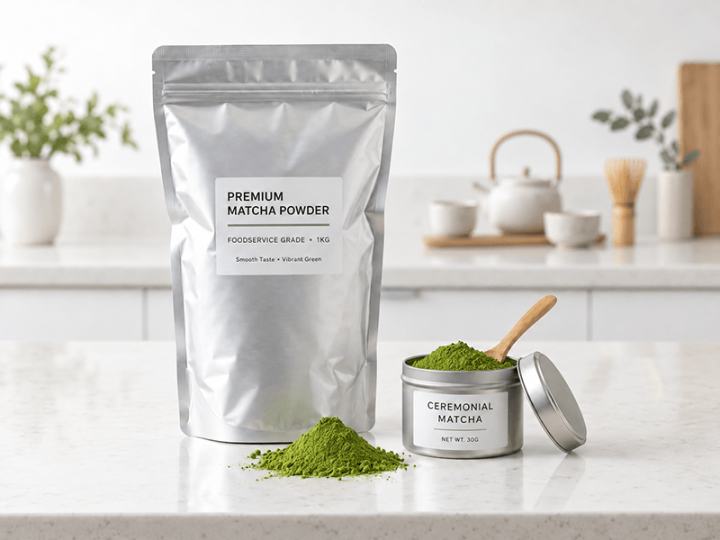
| 1kg aluminum foil bag | Cafés, distributors, foodservice | Practical, cost-effective, easy storage |
| Bulk carton packaging | Food manufacturers | Better for large production use |
| Retail tin | Premium private label brands | Strong shelf appeal |
| Stand-up pouch | E-commerce and retail brands | Flexible, lightweight, customizable |
| Stick pack / sachet | Instant drinks and samples | Convenient, portion-controlled |
| Custom packaging | Private label and OEM projects | Supports brand differentiation |
Common Mistakes to Avoid
Choosing Only by the Word “Ceremonial”
Many buyers assume ceremonial grade is always the best option. It may be best for direct drinking, but not always for lattes, bakery, or functional blends.
The best grade depends on your application.
Comparing Prices Without Comparing Grade Standards
Two suppliers may use the same grade name but offer very different quality. Always compare samples, color, taste, COA, origin, particle size, and intended use.
Testing Matcha Only in Water
If your final product is a latte, test it in milk. If your product is a cookie, test it after baking. If your product is a powder blend, test it in the full formula.
Ignoring Documentation
For importers, distributors, supplement brands, and private label companies, documentation is part of the product. A low price is not useful if the supplier cannot provide the documents your market requires.
Buying a Grade That Does Not Match Your Brand Position
A premium wellness brand should not use a dull, bitter matcha. A cost-sensitive bakery product may not need expensive ceremonial grade. Match the grade to your customer expectation and sales channel.
How TangMist Matcha Supports B2B Matcha Grade Selection
TangMist Matcha supplies bulk matcha powder, wholesale matcha, private label matcha, and OEM/ODM matcha solutions for global B2B buyers.
We support customers by helping them choose matcha grades based on real product applications, not just grade names.
Our support includes:
- Bulk matcha powder supply
- Wholesale matcha for cafés and distributors
- Application-based grade recommendations
- Private label packaging support
- Matcha samples for testing
- COA and specification documents
- Organic matcha options
- Foodservice and retail packaging solutions
- OEM/ODM product development support
- Export-ready documentation for international buyers
Whether you are developing a café menu, launching a private label matcha brand, sourcing for food manufacturing, or creating a functional powder blend, our team can help compare suitable matcha grades for your application.
FAQ
What is the best matcha grade for lattes?
For most café and beverage applications, premium or latte grade matcha is usually the best choice. It offers a good balance of color, taste, milk compatibility, and cost. However, the best grade should always be tested in your actual latte recipe.
Is ceremonial grade matcha necessary for private label products?
Not always. Ceremonial grade is suitable for premium drinking matcha and high-end retail tins. For matcha latte powders, bakery mixes, or functional blends, premium grade or culinary grade may be more practical.
What matcha grade should food manufacturers use?
Food manufacturers usually use culinary or premium culinary grade matcha. These grades are more suitable for baking, confectionery, ice cream, chocolate, and blended powder applications.
Can I use the same matcha grade for café drinks and baking?
You can, but it may not be the most cost-effective choice. Café drinks usually require better color and smoother taste, while baking products often need stronger flavor and better performance after heating.
What documents should I request from a matcha supplier?
B2B buyers should request a COA, product specification sheet, microbiological testing, heavy metal testing, pesticide testing if needed, shelf life information, and relevant certifications such as organic, Halal, or Kosher when required.
Should I request samples before ordering bulk matcha?
Yes. Sample testing is strongly recommended. You should test the matcha in your actual application, such as latte, bakery, smoothie, chocolate, powder blend, or retail packaging presentation.
Ready to Compare Matcha Grades for Your Product?
Choosing the right matcha grade is not about selecting the most expensive powder. It is about finding the best fit for your product, market, recipe, packaging, and target price.
Contact TangMist and we will assist you in comparing different grades of matcha, testing samples, discussing packaging options, and preparing a customized quote for your project.