Modern life rarely suffers from a lack of information. The real challenge is deciding what deserves attention.
Notifications interrupt work. Multiple browser tabs compete for mental space. Long meetings are followed by short deadlines, and the usual response is often to reach for a stronger stimulant. Yet feeling more activated is not always the same as thinking more clearly.
This is where matcha has attracted interest as a drink for focus. It naturally contains caffeine alongside L-theanine and tea polyphenols, creating a different ingredient profile from a simple caffeine-only beverage. Research suggests that caffeine and L-theanine together may modestly support certain aspects of attention, reaction time and task switching, although the effects vary and should not be exaggerated.
Matcha is not a shortcut to perfect concentration, a treatment for cognitive problems or a substitute for sleep. Its more realistic value is that it may support a focused daily routine while offering a preparation ritual that encourages people to pause before beginning demanding work.
What Does Cognitive Clarity Actually Mean?
“Cognitive clarity” is not a formal medical diagnosis or a single measurement used in clinical research. In everyday language, it usually describes the ability to feel mentally present, direct attention toward a task and process information without excessive distraction.
It can include several related experiences:
| Area | What It May Feel Like in Daily Life |
|---|---|
| Alertness | Feeling awake enough to engage with a task |
| Selective attention | Directing focus toward relevant information |
| Sustained attention | Remaining engaged over a longer work period |
| Task switching | Moving between tasks without becoming mentally disorganized |
| Working memory | Temporarily holding and using information |
| Mental steadiness | Feeling engaged without excessive stimulation |
These functions are related, but they are not identical. A drink may increase subjective alertness without improving memory. Someone may feel energized while still becoming distracted every few minutes.
That distinction matters when discussing matcha. The evidence is more supportive of modest effects on attention-related tasks than of dramatic improvements across every aspect of cognition.
Why Matcha Has a Distinct Focus Profile
Matcha is made from powdered tea leaves, so the prepared drink contains naturally occurring tea components including caffeine, L-theanine and catechins. The amounts are not identical across every powder because cultivar, cultivation, processing, storage and serving size can all affect composition.
For short-term focus, caffeine and L-theanine receive the greatest attention. Catechins remain important components of matcha, but they should not automatically be presented as immediate cognitive enhancers.
| Matcha Component | Potential Relevance to a Focus Routine | Important Limitation |
|---|---|---|
| Caffeine | Supports wakefulness and alertness | Can cause jitters, anxiety or sleep disruption |
| L-theanine | May complement caffeine in some attention tasks | Effects vary and the amount differs by product |
| Catechins | Contribute to matcha’s broader tea composition | Acute mental-performance claims remain less direct |
| Aroma and flavor | Can make a routine more enjoyable and repeatable | Sensory experience is subjective |
| Preparation ritual | Creates a deliberate transition into focused work | The ritual itself is not a medical intervention |
The potential benefit comes less from one “miracle molecule” and more from the complete experience: a moderate stimulant, naturally accompanying tea compounds and a repeatable moment of preparation.
What Caffeine Contributes to Mental Performance
Caffeine is a central nervous system stimulant. It can reduce feelings of tiredness and increase alertness, which helps explain why caffeinated drinks are commonly used before work, study and other attention-demanding activities.
However, more caffeine is not always better. Individual responses differ according to sensitivity, body size, habitual intake, medications and health conditions. Excessive intake can contribute to anxiety, jitters, increased heart rate, headaches and sleep disruption.
This creates an important distinction:
Caffeine may help someone feel more alert, but alertness alone does not guarantee calm, accurate or sustained attention.
A large dose may make one person feel productive and another feel restless. The aim of a focus-oriented matcha routine should therefore be to find an appropriate serving, not to maximize caffeine intake.
Matcha Caffeine Is Not Identical in Every Cup
It is difficult to give one universal caffeine number for matcha. Laboratory analyses show meaningful variation among tea samples, and the final amount consumed also depends on how many grams of powder are used.
A lightly prepared drink using a small amount of powder may deliver a very different experience from a large café latte containing several grams of matcha. Consumers and product developers should therefore avoid assuming that every matcha drink has the same stimulant strength.
What L-Theanine May Add
L-theanine is an amino acid naturally associated with tea. It is frequently described online as the compound that makes matcha “calm,” but the research is more nuanced than that simplified claim.
Controlled studies using caffeine and L-theanine together have reported improvements in some attention-switching, accuracy and distraction-related outcomes. One study found that a combination of 97 milligrams of L-theanine and 40 milligrams of caffeine supported attention during a demanding task, while other trials have also reported benefits in selected attention measures.
A 2025 systematic review and meta-analysis found small-to-moderate differences favoring caffeine plus L-theanine for certain cognitive outcomes, particularly some attention tasks during the first two hours after intake. However, the confidence intervals often reflected uncertainty, and relatively few studies tested ordinary tea beverages in normal daily environments.
This means the most responsible conclusion is:
L-theanine and caffeine may work together in ways that support some aspects of attention, but the effect is not universal, guaranteed or equally strong for every person.
Does L-Theanine Eliminate Caffeine Jitters?
That claim is too strong.
Some research suggests L-theanine may influence how caffeine is experienced or how participants perform on specific tasks. Other studies have found that it did not significantly reduce caffeine-related jitteriness or improve every mood measure.
It is more accurate to say that the combination has shown promising attention-related effects in controlled research. It should not be described as a guaranteed antidote to excessive caffeine.
What Matcha Research Actually Shows
Research on isolated caffeine and L-theanine is broader than research on matcha itself. Matcha-specific human studies exist, but many are small, use different test methods or focus on selected populations.
Evidence at a Glance
| Research Area | Main Finding | Responsible Interpretation |
|---|---|---|
| Acute matcha consumption | Slight effects were observed in speed of attention and episodic memory | The measured improvements were limited rather than dramatic |
| Young adults under mild stress | Matcha helped maintain aspects of attentional performance | It did not eliminate fatigue or prove a universal productivity effect |
| Middle-aged and older adults | Daily matcha showed benefits in selected attention and work-performance outcomes under stress | Results may not apply equally to all ages or situations |
| Twelve-month older-adult trial | Improvement was found in facial-emotion recognition, with a trend toward better sleep | The primary global cognition and daily-living outcomes did not significantly improve |
| Tea bioactive meta-analysis | Caffeine plus L-theanine may support certain attention and mood outcomes | Results were mixed, and more real-world tea studies are needed |
A 2017 matcha intervention study reported slight improvements in speed of attention and episodic secondary memory after a realistic serving, while emphasizing that additional research was needed.
A randomized study involving young adults found that matcha helped maintain attentional function following mild acute psychological stress, but it did not significantly change the participants’ feeling of fatigue.
Another randomized study involving middle-aged and older adults compared matcha, caffeine and placebo conditions. The researchers reported that continuous matcha intake supported selected attention and work-performance outcomes during psychological stress, suggesting that the complete matcha matrix may not behave exactly like caffeine alone.
In a 12-month randomized trial, 99 older adults with subjective cognitive decline or mild cognitive impairment received either two grams of matcha daily or placebo. The matcha group improved on a facial-emotion recognition measure, and sleep scores showed a non-significant trend toward improvement. However, the study’s primary global cognition and daily-living outcomes did not show significant differences.
How Strong Is the Evidence?
The evidence is promising but not conclusive.
The 2025 meta-analysis included 50 randomized trials in its systematic review, but only 15 were suitable for at least one meta-analysis. It concluded that caffeine plus L-theanine could benefit some cognitive and mood outcomes while highlighting uncertainty and the need for more studies using real tea beverages and everyday settings.
Several prominent matcha studies have also included researchers employed by tea companies, while the 2025 review disclosed industry-linked funding or employment among some authors. This does not invalidate the findings, but it is another reason to interpret the results alongside study size, design and replication rather than treating a single trial as final proof.
What Matcha May and May Not Do
Clear marketing begins by separating plausible benefits from exaggerated promises.
| Matcha May | Matcha Does Not Reliably |
|---|---|
| Support alertness through caffeine | Create perfect concentration |
| Help performance on some attention tasks | Eliminate distraction by itself |
| Fit into a deliberate work or study ritual | Replace sufficient sleep |
| Feel smoother to some people than stronger stimulants | Guarantee the absence of jitters |
| Help maintain attention during certain stressful tasks | Treat ADHD, dementia or another condition |
| Provide a moderate alternative for some caffeine users | Produce the same effect in every person |
Matcha should be viewed as a supportive beverage rather than a cognitive treatment.
People experiencing persistent brain fog, memory changes, severe fatigue or difficulty concentrating should not assume that a caffeinated drink addresses the underlying cause. Those symptoms can have many explanations and may require professional evaluation.
Beyond the Hype: Matcha Claims That Need More Care
“Matcha Releases Caffeine Slowly for Six Hours”
This claim appears frequently in online matcha content, but it is often presented without direct human evidence demonstrating a unique six-hour time-release mechanism.
Matcha contains caffeine, and the body still processes that caffeine as a stimulant. The subjective experience may differ because of serving size, drinking speed, individual sensitivity and the presence of other tea compounds, but a smooth experience should not be confused with proven slow-release delivery.
A more accurate statement is:
Matcha combines caffeine with naturally occurring L-theanine, and studies suggest that the combination may influence selected attention outcomes.
“Matcha Gives Energy Without a Crash”
No beverage can guarantee this.
A person’s experience depends on the dose, usual caffeine intake, sleep, food consumption and individual sensitivity. Matcha may feel steadier to some users, particularly when the total caffeine dose is lower than their usual drink, but others may still experience restlessness or a later drop in energy.
“More L-Theanine Always Means Better Focus”
The relationship is not that simple.
Research uses different caffeine-to-theanine ratios, often with isolated compounds at controlled doses. Those doses may not match the natural ratio found in a particular cup of matcha. The 2025 meta-analysis also found uncertainty across several outcomes.
“Matcha Prevents Cognitive Decline”
Current evidence does not justify presenting matcha as a proven prevention strategy.
The 12-month trial in older adults produced an interesting improvement in a social-cognition measure, but it did not significantly improve the study’s primary global cognition outcomes. Larger independent trials would be needed before drawing stronger conclusions.
How to Build a Matcha Routine for Focus
Matcha’s practical value may come from pairing a moderate caffeine source with a predictable work ritual.
The drink does not decide what deserves your attention. The routine around it can help create that boundary.
Use Matcha as a Starting Signal
Preparing matcha can mark the transition between unstructured activity and focused work.
Instead of drinking it while answering notifications, prepare the drink before beginning one defined task. Close unnecessary tabs, silence nonessential alerts and identify the next piece of work before taking the first sip.
This converts matcha from background consumption into an intentional cue.
Begin with a Moderate Serving
Because caffeine content varies, starting with a smaller serving is more useful than assuming a large café drink is appropriate.
Observe whether the drink supports alertness without producing tension, stomach discomfort or difficulty settling later in the day. Increasing the amount should not be the automatic response when concentration remains poor.
Consider the Time of Day
Caffeine can disrupt sleep, and sensitivity differs widely. Someone who sleeps normally after an afternoon matcha may respond differently from someone who is highly caffeine-sensitive. The FDA lists insomnia and sleep disruption among signs of excessive caffeine intake.
For a clarity-focused routine, morning or earlier daytime use is generally more compatible with protecting sleep than late-evening consumption.
Keep the Recipe Simple Enough to Evaluate
A matcha drink containing large quantities of syrup, cream and several added stimulants makes it harder to understand how the matcha itself affects the experience.
A simple matcha, lightly sweetened latte or unsweetened plant-milk drink creates a clearer baseline. The recipe can then be adjusted according to taste and energy needs.
Track the Experience, Not the Marketing Promise
A practical evaluation can record:
| Observation | Question |
|---|---|
| Alertness | Did I feel more awake without feeling overstimulated? |
| Attention | Was it easier to remain on one task? |
| Mood | Did I feel steady, tense or unchanged? |
| Digestion | Did the drink feel comfortable? |
| Sleep | Did it affect falling asleep or sleep quality? |
| Repeatability | Was the experience similar on different days? |
A single productive day does not prove a cognitive effect. Repeated observation under similar conditions provides a more useful personal picture.
Choosing Matcha for a Clarity-Focused Experience
The matcha used for a focus-oriented routine should first be enjoyable enough to drink consistently.
A harsh powder that requires large amounts of sweetener may not support the intended experience. Likewise, an extremely delicate grade may be unnecessary when the drink will be combined with milk.
Flavor Balance Matters
A suitable daily matcha generally provides a recognizable tea aroma, controlled bitterness and a clean finish. The goal is not to remove every vegetal note, since those characteristics are part of matcha’s identity.
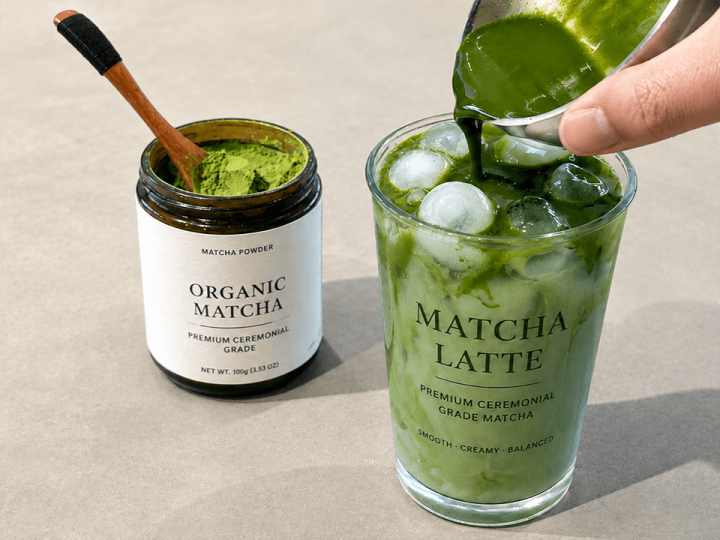
For drinking with water, smoothness and aroma usually receive greater emphasis. For milk-based drinks, the powder needs enough flavor to remain noticeable after dilution.
Powder Fineness Supports Texture
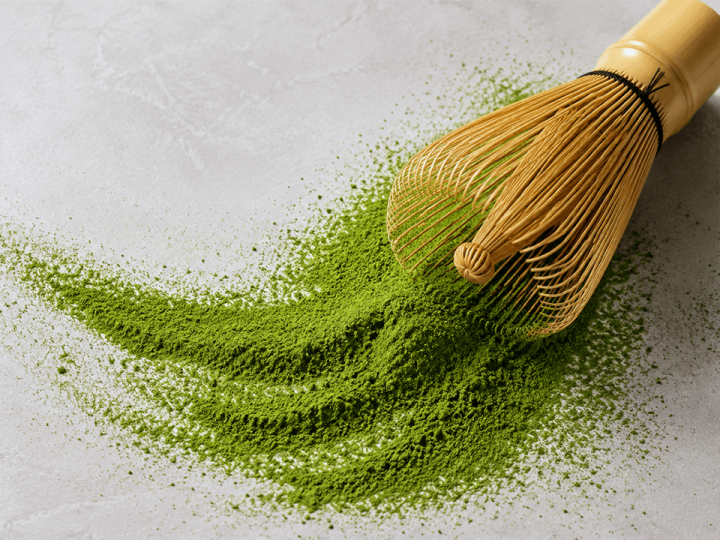
Matcha does not fully dissolve like sugar. It remains suspended, so fine powder and proper preparation help create a smoother drink.
Sifting the powder and first dispersing it in a small amount of water can reduce visible clumps. Heavy grittiness should not be accepted as an unavoidable feature of matcha.
Freshness Influences the Experience
Exposure to air, moisture, heat and light can affect matcha’s aroma, color and clumping. Working with smaller, well-sealed packages may be more practical than repeatedly opening a large container over a long period.
The best powder is not only the one that looks good when first opened. It should remain manageable within the actual consumption or service period.
What Cafés and Beverage Brands Should Learn from the Focus Trend
The growing interest in matcha for productivity creates an opportunity for cafés and beverage brands, but it also creates pressure to use exaggerated claims.
A stronger product concept does not need to promise superhuman concentration. It can instead focus on an intentional workday ritual, naturally occurring caffeine, the presence of L-theanine and a balanced sensory experience.
A Responsible Positioning Framework
| Weak or Risky Message | More Responsible Direction |
|---|---|
| Eliminates brain fog | Designed for a more intentional daily routine |
| Proven to maximize intelligence | Contains naturally occurring caffeine and L-theanine |
| Prevents cognitive decline | Inspired by emerging research on tea and attention |
| No jitters or crash | A balanced matcha option with transparent caffeine information |
| Treats attention problems | Created for workday, study and lifestyle occasions |
Disease-related or guaranteed performance claims should not be used without appropriate substantiation and market-specific regulatory review.
Product Format Changes the Experience
A pure matcha beverage, a sweetened latte mix and a ready-to-drink product may all use matcha, but they are not nutritionally or functionally identical.
Brands developing a focus-oriented product should evaluate the full formulation, including the matcha dosage, total caffeine, sweetener level, serving size and any additional stimulant ingredients.
Transparent formulation is more credible than relying on the word “matcha” alone.
Caffeine Safety and Individual Sensitivity
For most adults, the FDA cites 400 milligrams of caffeine per day as an amount not generally associated with negative effects. This is a general reference rather than a personal target, and some people experience unwanted effects at much lower intakes.
Total intake should include caffeine from matcha, coffee, tea, chocolate, energy drinks, supplements and medications.
People who are pregnant, trying to become pregnant, breastfeeding, taking certain medications or managing relevant health conditions should discuss caffeine intake with a qualified healthcare professional. ACOG advises keeping caffeine below 200 milligrams per day during pregnancy.
Caffeine-sensitive individuals should pay attention to signs such as anxiety, palpitations, sleep disruption, nausea, headache and persistent restlessness.
Frequently Asked Questions
Does Matcha Help You Focus?
Matcha may support focus for some people because it contains caffeine and L-theanine. Research has found modest improvements in selected attention-related tasks, but the effect is not guaranteed and does not extend equally to every area of cognition.
Is Matcha a Nootropic?
“Nootropic” is a broad marketing and popular-culture term rather than a single regulated scientific category.
Matcha contains compounds studied in relation to attention and cognition, but it is more accurate to describe it as a caffeinated tea beverage than as a proven cognitive-enhancement treatment.
How Quickly Can Matcha Affect Attention?
Many caffeine-and-theanine studies assess cognitive performance during the first one or two hours after intake. This does not mean every person will notice a clear effect within a fixed period. Food intake, serving size, caffeine tolerance and individual metabolism can all influence the experience.
Is Matcha Better Than Coffee for Concentration?
Not universally.
The better option depends on caffeine dose, preparation, personal tolerance and preference. Matcha offers a naturally occurring combination of caffeine and L-theanine, but coffee may be more suitable for someone who prefers its flavor or responds well to its caffeine level.
The two drinks should not be represented as producing identical, predictable “energy curves.”
Can Matcha Treat Brain Fog?
No evidence establishes matcha as a treatment for brain fog.
Temporary tiredness may improve when caffeine increases alertness, but persistent cognitive difficulties can be related to sleep, stress, medication, nutrition or medical conditions. A beverage should not replace appropriate evaluation.
How Much Matcha Should I Drink for Focus?
There is no universally proven dose for focus.
Caffeine and L-theanine concentrations vary among powders, and research doses do not always match ordinary consumer servings. Begin with a moderate serving, check available caffeine information and consider total caffeine from all sources.
Can Matcha Be Consumed Every Day?
Many adults include caffeinated tea in their daily routine, but suitability depends on total caffeine intake, sensitivity, sleep and health circumstances.
Daily consumption should not produce recurring anxiety, palpitations, digestive discomfort or sleep problems.
Does Adding Milk Reduce Matcha’s Focus Benefits?
Milk changes the flavor, texture and total nutrition of the drink, but there is not enough evidence to claim that a standard milk-based matcha latte loses all attention-related potential.
The more practical concerns are the amount of matcha used, total caffeine and whether a heavily sweetened recipe creates the experience the user wants.
Is Ceremonial Matcha Necessary for Mental Clarity?
No grade name guarantees a cognitive effect.
For drinking with water, a smoother and more aromatic matcha may create a more enjoyable routine. For lattes, a stronger café-suitable grade may provide better flavor. Selection should be based on quality, formulation and intended use rather than a health claim attached to a grade name.
Can Matcha Replace Sleep?
No.
Caffeine may temporarily reduce the feeling of tiredness, but it does not replace the restorative role of sleep. Late or excessive caffeine can also contribute to sleep disruption, which works against sustained mental performance.
Final Thoughts
Matcha earns its place in the conversation about cognitive clarity not because it guarantees extraordinary mental performance, but because it combines moderate stimulation, naturally occurring tea compounds and an intentional preparation ritual.
Research suggests that caffeine and L-theanine may modestly support selected aspects of attention, particularly during demanding tasks. Matcha-specific studies also provide promising signals, including maintained attention under mild stress. At the same time, the evidence remains mixed, many studies are small, and stronger claims are not yet justified.
The most useful way to approach matcha is therefore neither as hype nor as medicine.
Use it as a carefully prepared beverage that may help create the conditions for focused work. Choose an appropriate serving, protect sleep, observe personal sensitivity and remember that the drink supports the routine—it does not perform the work for you.
Build Better Matcha Experiences with TangMist
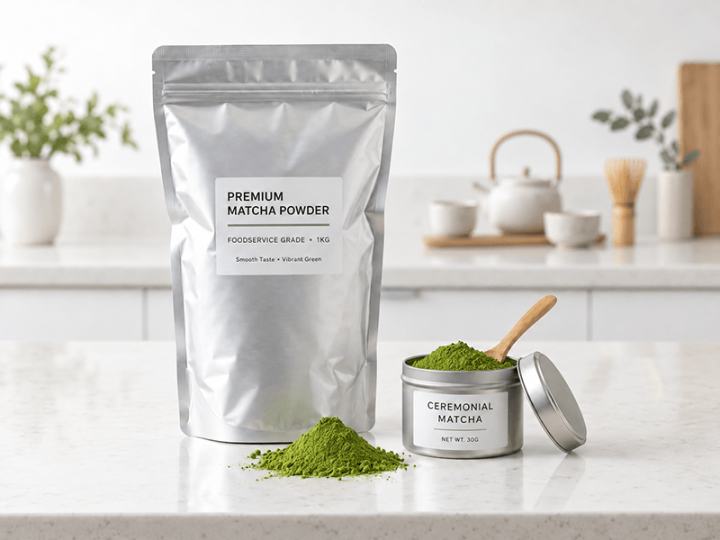
TangMist supplies bulk matcha powder for cafés, beverage brands, foodservice businesses and private label projects.
Different grades can be evaluated for pure matcha drinks, lightly sweetened workday beverages, café lattes, powdered drink mixes and ready-to-drink concepts. Product selection can consider flavor, color, bitterness, texture, intended dosage and performance in the complete formulation.
TangMist also supports commercial buyers with product specifications, batch documentation, bulk packaging options and application-based sample comparison.
Contact TangMist to discuss matcha samples for café menus, beverage development or private label products.