Matcha is frequently described as a superfood, antioxidant powerhouse, clean-energy drink or natural performance booster.
These descriptions are attractive, but they can also make it difficult to separate useful science from wellness marketing.
The word “superfood” does not have an official or legally standardized definition. It is generally used to describe foods perceived as nutrient-dense or especially beneficial, but the label does not prove that a product prevents disease, improves performance or produces a specific clinical outcome. No single food can provide all the nutrition, energy and health support a person needs.
Matcha deserves attention for more practical reasons.
It is a powdered tea containing caffeine, L-theanine and a range of plant compounds. It can fit into a consistent morning ritual, provide a moderate source of caffeine and be formulated into drinks that support different lifestyles and usage occasions.
Human studies have investigated matcha in relation to attention, psychological stress, exercise metabolism, perceived fatigue and longer-term cognitive outcomes. Some results are promising, but the evidence remains mixed, and many studies are small or use one specific matcha product.
The strongest position is therefore not that matcha is a miracle superfood.
It is that matcha is a complex caffeinated food that may contribute to vitality when it is used within a balanced routine.
What Does Vitality Actually Mean?
“Vitality” is not one laboratory measurement or medical diagnosis.
In this article, vitality refers to a person’s practical capacity to feel awake, engage with daily tasks, remain active, manage ordinary demands and recover sufficiently to continue those activities.
This broader definition prevents the discussion from being reduced to caffeine alone.
A person can feel temporarily stimulated without being well rested. Someone can also consume a nutrient-rich product while remaining inactive, dehydrated or chronically sleep deprived.
Matcha may contribute to selected parts of vitality, but it cannot create the complete condition on its own.
A Practical Vitality Framework
| Area of Vitality | What It Means in Daily Life | How Matcha May Contribute | What Matcha Cannot Replace |
|---|---|---|---|
| Mental alertness | Feeling awake and able to begin a task | Caffeine may support alertness and attention | Adequate sleep and treatment of persistent fatigue |
| Cognitive steadiness | Remaining engaged during demanding work | Matcha’s caffeine and L-theanine combination has been studied for attention under stress | Guaranteed concentration or treatment of cognitive disorders |
| Physical readiness | Willingness and capacity to move or exercise | Early studies have examined fat oxidation, fatigue and training adaptation | Exercise, protein intake and recovery programming |
| Daily resilience | Maintaining function during normal stress | Some trials report selected attention or stress-related effects | Treatment for anxiety, depression or chronic stress |
| Long-term well-being | Sustainable health-supporting habits | Matcha can replace more heavily sweetened drinks and support a consistent routine | A varied diet, medical care and healthy lifestyle habits |
The phrase “matcha vitality” should therefore describe a supportive role, not a guaranteed biological transformation.
Why Matcha Is More Than a Marketing Label
Matcha differs from a conventional tea infusion because the powder is dispersed into the drink and consumed rather than steeped and removed.
Analytical studies have identified caffeine, catechin-related compounds, phenolic acids and other plant components in matcha powder. Research has also measured dietary fiber, plant protein and fatty acids in dry matcha. However, the amount delivered by a normal serving depends on the powder, serving weight and formulation, so matcha should not automatically be promoted as a major source of protein, fiber or essential nutrients without product-specific analysis.
This distinction matters for two reasons.
First, matcha is not a single isolated ingredient such as pure caffeine or an L-theanine supplement. It contains several compounds in one food matrix.
Second, not every matcha has the same composition. Cultivation, raw material, processing, storage and product grade can influence caffeine, amino acids, phenolic compounds, chlorophyll and sensory performance. Commercial samples should therefore be evaluated individually rather than treated as chemically identical.
The presence of multiple compounds creates scientific interest, but it does not mean that every theoretical mechanism produces a meaningful human benefit.
Matcha and Mental Energy
In everyday language, “energy” often means alertness rather than dietary calories.
Caffeine is the most direct contributor to this effect.
The European Food Safety Authority has concluded that caffeine doses of approximately 75 milligrams or more have commonly produced measurable improvements in attention or alertness-related outcomes in controlled studies. The exact amount of caffeine in a matcha drink can vary according to the powder and serving size.
A 2017 matcha intervention study tested matcha in beverage and snack formats. The results suggested slight improvements in selected measures of attention speed and episodic memory, but the effects were modest and did not support the idea of a dramatic cognitive transformation.
A later randomized study in young adults reported that two weeks of matcha intake helped maintain attentional performance after a mild acute psychological stress task. Importantly, the study did not find that matcha eliminated the participants’ feeling of fatigue.
This distinction is important.
A person may perform slightly better on an attention task without feeling completely refreshed. Matcha may support one part of daily function without correcting the underlying cause of tiredness.
Is Matcha Energy Different from Coffee Energy?
Matcha and coffee both contain caffeine, and the body does not treat caffeine as a completely different molecule because it came from tea.
The distinctive experience of matcha may be influenced by serving size, caffeine dose, drinking speed, food intake, personal sensitivity and the presence of tea compounds such as L-theanine.
Controlled studies have investigated caffeine and L-theanine together and have found improvements in selected attention tasks under some conditions. However, results depend on the dose and outcome measured. The evidence does not justify a universal promise that matcha always produces calm energy, prevents jitters or delivers a guaranteed crash-free six-hour effect.
For product and menu development, the more credible message is that matcha offers a different beverage experience and a potentially moderate caffeine format.
It should not be described using an artificial energy curve that has not been established for the actual product.
L-Theanine and the Idea of Calm Alertness
L-theanine is an amino acid found in tea and is frequently used to explain matcha’s reputation for calm focus.
Research on isolated L-theanine and caffeine combinations has reported selected benefits for attention and task performance. However, supplement studies often use controlled doses that may not match the amount naturally present in a particular serving of matcha.
The amount and ratio of L-theanine to caffeine can also vary between matcha products.
A 2021 matcha study used a daily serving formulated to provide specific measured amounts of caffeine, catechins and L-theanine. Results from that product cannot automatically be transferred to every commercial powder or latte.
Brands should therefore avoid describing L-theanine as if it neutralizes caffeine or guarantees relaxation.
A more responsible statement is that matcha naturally contains both caffeine and L-theanine and that their combination has been studied in relation to attention and stress-related performance.
Matcha, Stress and Daily Resilience
Vitality is not only about becoming more stimulated. It also involves maintaining function when normal demands increase.
Randomized trials in younger, middle-aged and older adults have examined matcha during mild psychological stress. Selected studies reported that matcha maintained attention or improved certain work-performance measures compared with placebo or caffeine-only conditions.
These findings are interesting, but they should be interpreted carefully.
The studies examined controlled laboratory stress tasks rather than serious anxiety disorders, burnout or chronic occupational stress. Several authors were affiliated with a major tea company, which does not invalidate the results but should be considered when assessing the overall evidence.
Matcha should not be marketed as a treatment for anxiety, chronic stress or mental illness.
Its more realistic role is as a caffeinated beverage that may support selected aspects of attention during ordinary demanding situations.
Matcha and Physical Vitality
Physical vitality includes the willingness to move, the ability to participate in exercise and the capacity to recover sufficiently for future activity.
Matcha research in this area is still developing.
Matcha and Fat Oxidation During Exercise
A randomized crossover study involving 13 women reported that matcha consumption increased measured fat oxidation during a 30-minute brisk walk. The researchers explicitly warned that the metabolic effect should not be overstated in the context of weight loss.
A later study reported increased exercise-related fat oxidation after three weeks of daily matcha intake in adult women. These findings suggest a possible effect on exercise substrate use, but they do not prove that matcha produces meaningful fat loss or replaces the energy balance created through diet and physical activity.
“Supports fat oxidation during exercise” and “burns body fat” are not equivalent statements.
The first refers to a measured metabolic outcome under specific study conditions. The second suggests a body-composition result that the matcha studies did not establish.
Matcha, Fatigue and Resistance Training
A 2023 study investigated healthy, previously untrained men completing resistance training. Participants consumed either a beverage containing 1.5 grams of matcha twice daily or a placebo beverage with an equal amount of caffeine.
Across two small trials, the matcha groups showed selected differences in early subjective fatigue, skeletal muscle mass, cortisol and training-related outcomes. The findings suggest that matcha may influence some responses to training, but the studies involved only 36 men in total and produced several exploratory outcomes rather than definitive proof of enhanced athletic performance.
The study products were supplied by Nestlé Japan, and the research received support from the Matcha and Health Research Group as well as public research funding. This relationship should be disclosed when the findings are used in commercial education.
Exercise remained the primary stimulus.
Matcha did not create muscle adaptation without resistance training, and it should not be presented as a substitute for training, protein intake, adequate calories or sleep.
Antioxidants: Important Chemistry, Not a Magic Shield
Matcha contains phenolic compounds and catechin-related substances that demonstrate antioxidant activity in laboratory analysis.
Studies have reported measurable polyphenols, flavonoids, rutin and antioxidant capacity in matcha preparations. Extraction temperature, product selection and analytical method can influence the result.
This provides useful information about the chemical properties of matcha.
It does not automatically prove that drinking matcha prevents cancer, reverses aging, detoxifies the body or protects every cell from oxidative damage.
Laboratory antioxidant assays measure how a sample behaves under controlled chemical conditions. Human health outcomes involve digestion, absorption, metabolism, dose, overall diet and many other factors.
In vitro digestion research has also shown that only part of the measured matcha compounds may become available during simulated digestion. This reinforces the difference between compound content in a powder and biological effects in a person.
For consumer communication, “contains naturally occurring tea polyphenols” is more defensible than “detoxifies your entire body.”
What Human Matcha Research Actually Shows
The evidence is more useful when findings and limitations are examined together.
Matcha Evidence at a Glance
| Research Area | Study Design | Main Finding | Responsible Interpretation |
|---|---|---|---|
| Acute cognition | Human intervention using matcha drink and snack formats | Small effects on selected attention and memory measures | Matcha may modestly influence certain cognitive tasks |
| Attention under stress | Randomized trial after two weeks of matcha intake | Attention was better maintained after mild psychological stress | Does not prove treatment of stress, anxiety or fatigue |
| Brisk walking metabolism | Randomized crossover study in 13 women | Increased fat oxidation during a 30-minute walk | Preliminary metabolic effect; not proof of weight loss |
| Resistance training | Two small randomized trials in 36 untrained men | Selected differences in fatigue, muscle mass and cortisol | Matcha may support training responses, but evidence is early |
| Longer-term cognition | Twelve-month trial in 99 older adults | Improvement in social acuity; primary cognitive and daily-living outcomes were not significant | Does not establish broad cognitive protection or dementia prevention |
Evidence sources:
The twelve-month study is particularly useful for understanding why individual positive findings should not be exaggerated.
Participants received two grams of matcha or placebo daily. Matcha improved a measure related to recognizing facial emotions, but the trial’s primary cognitive and daily-living outcomes did not show significant differences. Sleep scores showed a trend rather than a statistically significant improvement. The study also disclosed that several authors were employees of MCBI or ITO EN.
A scientifically responsible article should report both the positive and non-significant outcomes.
Why a Food Matrix Matters
One reason matcha attracts research interest is that it combines several substances rather than delivering one isolated compound.
Caffeine may influence alertness. L-theanine has been studied in relation to attention and stress. Catechins and other phenolic compounds have antioxidant activity in laboratory models. The powder also contains non-extractable leaf components that would not be present in the same way in a filtered tea infusion.
Researchers sometimes propose that these components may interact.
However, “synergy” should not be used as a substitute for clinical evidence.
A combination can produce a different effect from one isolated ingredient, but the effect must still be measured in humans, at realistic serving sizes, using the finished product.
For brands, the benefit of the food-matrix story is not that it proves every possible health claim.
It is that matcha can be positioned as a recognizable tea-based food rather than a synthetic energy formula built around highly concentrated stimulants.
Vitality Does Not Mean Constant Stimulation
Wellness marketing often treats more energy as automatically better.
In practice, sustainable vitality depends on a cycle of activity and recovery.
A person who uses caffeine late in the day may feel more alert temporarily while reducing sleep quality later. EFSA has noted that a 100-milligram caffeine dose can increase sleep latency and reduce sleep duration in some adults when consumed close to bedtime.
This is why serving time matters as much as ingredient choice.
Matcha may fit well in a morning routine, before focused work or earlier in the day before physical activity. It may be less suitable as a late-evening wellness drink for a caffeine-sensitive customer.
A vitality product should support the complete day rather than borrowing alertness from the following night’s sleep.
How to Use Matcha as Part of a Vitality Routine
A useful matcha routine does not need to be extreme.
The serving should be selected according to the powder’s actual caffeine content and the individual’s sensitivity. A new user can begin with a moderate amount and observe alertness, digestion, anxiety symptoms and sleep.
Timing the drink earlier in the day is generally more compatible with sleep protection.
The complete recipe also matters. A matcha drink containing large amounts of syrup, sweetened creamer and toppings may deliver a different nutritional experience from a simple matcha prepared with water or lightly sweetened milk.
Matcha can become a behavioral signal that marks the beginning of work, study, exercise or a deliberate break. That ritual value is not a pharmaceutical effect, but it can still make the product useful.
Caffeine Safety and Individual Sensitivity
Matcha contains caffeine, and caffeine should be considered across the entire day rather than drink by drink.
The FDA states that up to 400 milligrams of caffeine per day is not generally associated with negative effects for most adults. It also emphasizes that sensitivity varies according to body weight, medications, medical conditions, pregnancy status and individual metabolism.
Excessive caffeine can contribute to insomnia, anxiety, jitters, increased heart rate, palpitations, digestive discomfort, nausea and headaches.
The 400-milligram reference is not a target and does not mean every person should consume that amount.
Someone who drinks matcha alongside coffee, pre-workout products, energy drinks, chocolate or caffeinated supplements must consider the combined total.
Pregnant or breastfeeding customers and people with relevant health conditions or medications should discuss caffeine intake with a healthcare professional.
What Matcha Cannot Be Expected to Do
Matcha is not a substitute for sleep.
It does not correct iron deficiency, thyroid disease, depression, sleep disorders or other medical causes of persistent fatigue.
It is not a proven detox treatment, weight-loss drug, muscle-building supplement or disease-prevention therapy.
Matcha also does not guarantee calmness, focus or freedom from a caffeine crash. Individual responses vary, and the recipe, serving size and drinking pattern can change the experience.
These limitations do not reduce matcha’s value.
They create a more credible foundation for using it.
What Cafés and Brands Should Learn from the Science
The strongest commercial opportunity is not to make the largest health promise.
It is to create a matcha product whose formulation and communication fit the evidence.
Responsible Matcha Vitality Positioning
| Product Message | More Responsible Positioning | Wording to Avoid |
|---|---|---|
| Morning energy | A caffeinated matcha drink for an alert morning routine | Provides unlimited energy all day |
| Focus | Contains caffeine and L-theanine, compounds studied for attention | Eliminates brain fog or treats ADHD |
| Exercise | A matcha beverage designed for active lifestyles | Burns fat without diet or exercise |
| Stress | Supports a calm, intentional daily ritual | Treats anxiety or lowers stress hormones for everyone |
| Antioxidants | Contains naturally occurring tea polyphenols | Detoxifies the body or prevents disease |
| Recovery | Can be included in a balanced post-activity routine | Repairs muscle or replaces protein |
| Wellness | A versatile tea-based drink for everyday use | A miracle superfood that transforms health |
Product pages should distinguish ingredient facts from outcome claims.
“Contains caffeine” is a composition statement. “Improves endurance” is a performance claim. “Contains tea polyphenols” is different from “prevents oxidative disease.”
The stronger the promised outcome, the stronger the required substantiation.
Formulation Determines the Final Vitality Product
Matcha science cannot be separated from product design.
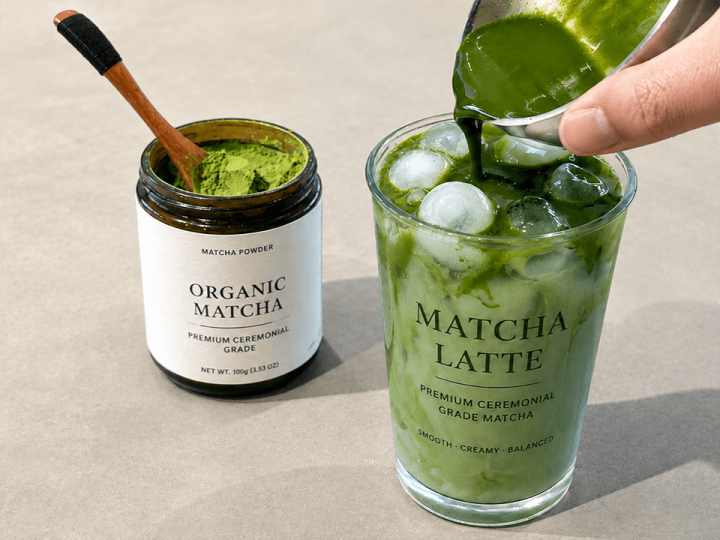
A pure matcha, oat milk latte, bottled beverage, sweetened sachet and functional powder blend can contain very different amounts of matcha, caffeine, sugar and other ingredients.
A brand developing a vitality-oriented product should confirm the serving size and expected caffeine exposure. The matcha should also be tested in the complete recipe because milk, sweeteners, flavoring, acidity and processing can change its sensory performance.
When the product is sold in multiple serving sizes, the caffeine and matcha amounts should remain commercially and nutritionally coherent.
A small lightly sweetened drink may communicate balanced daily use more effectively than an oversized product built around multiple stimulant ingredients.
Matcha Quality Still Matters
Health-oriented positioning cannot compensate for poor flavor, unstable color or inconsistent batches.
A customer is more likely to maintain a matcha routine when the product tastes pleasant, is easy to prepare and produces repeatable results.
Quality evaluation should therefore include sensory performance, dosage, caffeine considerations, packaging protection and batch documentation.
Brands should also avoid assuming that the brightest or most expensive powder will automatically create the strongest vitality product.
The correct matcha is the one that produces the intended flavor and appearance at a realistic serving size while supporting the product’s responsible positioning.
Frequently Asked Questions
Is Matcha Really a Superfood?
Superfood is a popular marketing term rather than an officially standardized nutritional category.
Matcha contains caffeine and several tea-related plant compounds, but it should be evaluated according to the actual product, serving size and available human evidence.
Does Matcha Give You Energy?
Matcha contains caffeine, which can support alertness and attention.
It does not create metabolic energy in the same way that calories do, and it cannot replace sleep, hydration or adequate nutrition.
Does Matcha Provide Energy Without a Crash?
Some people describe matcha as producing a steadier experience than other caffeinated drinks, but this response is not guaranteed.
The caffeine dose, drinking speed, food intake, individual sensitivity and total daily caffeine all influence the experience.
Does L-Theanine Make Matcha Calming?
L-theanine has been studied alone and in combination with caffeine for attention and stress-related outcomes.
The amount in matcha varies, and it should not be claimed to eliminate anxiety, jitters or stress.
Can Matcha Improve Focus?
Human studies report modest improvements in selected attention measures, including under mild stress conditions.
The evidence does not show that matcha guarantees concentration or treats cognitive disorders.
Does Matcha Burn Fat?
Small exercise studies have reported increased fat oxidation during certain walking or moderate-exercise conditions.
This does not prove that matcha independently causes weight loss or body-fat reduction.
Is Matcha Good Before Exercise?
Matcha can provide caffeine and may suit some people before exercise.
Tolerance, serving time and total caffeine should be considered, and matcha does not replace appropriate food, hydration or training preparation.
Can Matcha Help with Exercise Recovery?
A small resistance-training study reported selected differences in fatigue and training adaptation.
The research is preliminary and does not establish matcha as a replacement for protein, calories, rest or a structured recovery plan.
Are Matcha Antioxidants Clinically Proven?
Matcha demonstrates antioxidant activity in laboratory analysis and contains phenolic compounds.
Laboratory antioxidant measurements do not by themselves prove disease prevention or clinical health benefits in humans.
How Much Matcha Should Someone Use?
The appropriate amount depends on the powder, recipe, caffeine content and individual sensitivity.
Commercial products should define a repeatable serving rather than relying on vague instructions such as “one spoonful.”
Can Matcha Be Consumed Every Day?
Many adults include caffeinated tea in their daily diets, but total caffeine intake and individual response should be considered.
Customers experiencing anxiety, palpitations, digestive discomfort or sleep disruption may need to reduce the amount or consume it earlier.
Final Thoughts
Matcha is more useful when it is taken out of the superfood fantasy and placed into a realistic daily context.
Its caffeine can support alertness. Its combination of tea compounds has been studied for attention and stress-related performance. Small studies have also explored exercise metabolism, fatigue and training adaptation.
These findings make matcha scientifically interesting.
They do not make it a cure, detox treatment, guaranteed fat burner or unlimited source of energy.
Vitality is produced through a wider system that includes sleep, nutrition, movement, recovery, hydration, mental health and meaningful daily routines.
Matcha can participate in that system.
Its strongest role may be as a moderate caffeinated beverage that combines sensory enjoyment, ritual and selected evidence-based physiological effects.
The science does not need to be exaggerated to make the product valuable.
Develop Vitality-Focused Matcha Products with TangMist
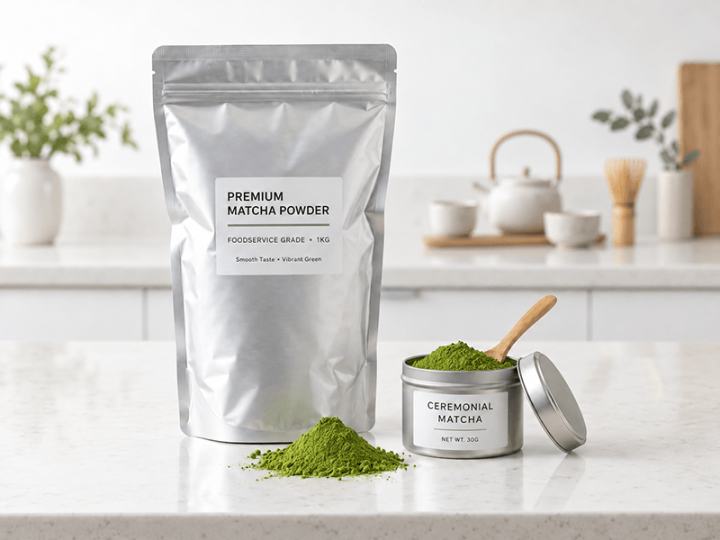
TangMist supplies bulk matcha powder for cafés, beverage brands, food manufacturers, distributors and private label projects.
Different matcha profiles can be evaluated for pure drinks, dairy and plant-based lattes, single-serve sachets, flavored blends, ready-to-drink concepts and other daily wellness products.
Product selection can consider flavor, color, caffeine positioning, serving size, sweetness, application performance and target cost.
TangMist can also support projects with product specifications, batch documentation, bulk packaging and private label options.
Request Matcha Samples for Your Product
For a relevant recommendation, provide the intended product format, serving size, main ingredients, target customer, packaging preference, destination market and estimated order volume.
Contact TangMist to develop a credible matcha product that supports everyday vitality without relying on exaggerated superfood claims.