Matcha and coffee are two of the world’s most recognizable caffeinated drinks, but they provide very different experiences in flavor, preparation and everyday use.
Coffee is generally chosen for its roasted aroma, familiar brewing culture and relatively strong caffeine delivery. Matcha offers a vegetal, slightly bitter and umami-rich profile that works in traditional tea, milk-based drinks, fruit beverages and powdered formulations.
The matcha vs coffee comparison is often presented as a simple question of which drink is healthier or provides better energy. In practice, there is no single answer. The more useful comparison considers caffeine dosage, individual sensitivity, serving size, added ingredients and the way each drink fits into a daily routine.They can serve different consumption occasions, flavor preferences and product positions.
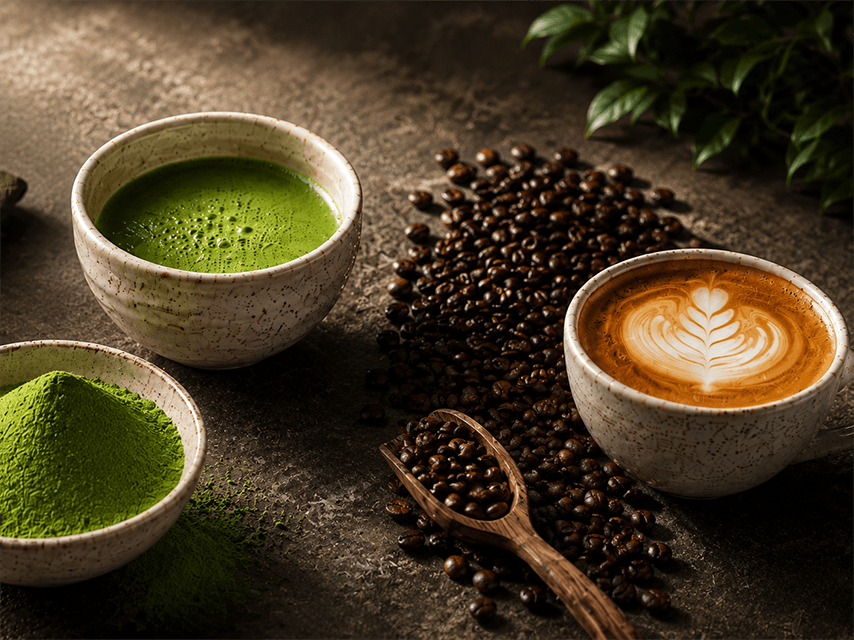
Matcha vs Coffee at a Glance
Matcha is made by finely grinding specially processed tea leaves into powder. Because the powder is suspended in water rather than removed after steeping, the prepared drink contains the tea leaf material itself. Matcha naturally contains caffeine, L-theanine and tea catechins.
Coffee is prepared by extracting roasted and ground coffee beans with water. Its composition varies according to the bean variety, roast level, grind size and brewing method. In addition to caffeine, coffee contains compounds such as chlorogenic acids, trigonelline and roasting-derived components.
| Comparison Area | Matcha | Coffee |
|---|---|---|
| Main ingredient | Finely ground tea leaves | Roasted coffee beans |
| Typical flavor | Vegetal, grassy, umami and mildly bitter | Roasted, nutty, chocolate-like, fruity or bitter |
| Caffeine level | Usually moderate, but highly dependent on powder dosage | Often higher per standard café serving |
| Other notable compounds | L-theanine and catechins | Chlorogenic acids and other coffee polyphenols |
| Common preparation | Whisked with water or blended into milk | Drip brewed, espresso, cold brew or instant |
| Popular applications | Tea, lattes, fruit drinks, desserts and blends | Black coffee, espresso drinks and cold brew |
| Main commercial advantage | Distinct color, flexible positioning and broad product applications | Familiar taste, established demand and strong coffee culture |
The comparison is only approximate because both drinks can vary considerably. A concentrated matcha drink may contain more caffeine than a weak coffee, while a large cold brew can contain substantially more caffeine than either.
How Much Caffeine Is in Matcha Compared with Coffee?
Caffeine content is one of the most searched aspects of the matcha vs coffee discussion.
Published analyses have reported approximately 18.9 to 44.4 milligrams of caffeine per gram of matcha powder. A serving made with 1.5 to 2 grams of powder could therefore provide roughly 28 to 89 milligrams, although the actual amount depends on the product and preparation.
The FDA reports that a 12-fluid-ounce serving of regular brewed, non-specialty coffee typically contains approximately 113 to 247 milligrams of caffeine. Coffee caffeine can vary according to brewing method, bean type, serving size and strength.
Approximate Caffeine Comparison
| Beverage | Example Serving | Approximate Caffeine |
|---|---|---|
| Matcha | 1.5 g powder | About 28–67 mg |
| Matcha | 2 g powder | About 38–89 mg |
| Brewed coffee | 12 fl oz | About 113–247 mg |
| Decaffeinated coffee | 8 fl oz | About 2–15 mg |
These figures should not be treated as fixed values. Matcha powder composition can vary, and café recipes may use one, two or more teaspoons. Coffee servings can also range from a small espresso to a large cold brew.
Why Serving Size Matters More Than the Drink Name
A customer may assume that all matcha drinks contain less caffeine than coffee. That is not always correct.
A lightly prepared matcha made with one gram of powder will generally contain less caffeine than a standard coffee. A concentrated matcha made with three or four grams may contain a similar amount to some coffee drinks.
The same issue applies to coffee. Espresso is concentrated, but a single espresso serving is small. A large brewed coffee or cold brew may deliver much more total caffeine because the serving contains more liquid and a larger quantity of extracted coffee.
A Practical Comparison for Consumers
The most accurate approach is to compare the total caffeine in the complete serving rather than comparing caffeine concentration or beverage category alone.
A Practical Comparison for Cafés
Cafés should standardize the number of grams of matcha used in each drink. This improves flavor consistency, cost control and caffeine estimation.
Why Powder Measurement Is Important
Using spoons without checking their actual weight can create significant variation. One employee may prepare a level spoon while another uses a heaped spoon, resulting in different color, flavor and caffeine content.
Does Matcha Provide More Sustained Energy Than Coffee?
Matcha is frequently promoted as providing “steady energy” or “a caffeine release without a crash.” This idea should be explained carefully.
Caffeine is the primary stimulant in both matcha and coffee. The FDA notes that the body does not treat naturally occurring caffeine in tea differently from naturally occurring caffeine in coffee. Caffeine is rapidly absorbed after consumption, and peak blood concentrations can occur within approximately 15 to 120 minutes, depending on the individual and other dietary factors.
There is not strong evidence that matcha causes caffeine to be physically released over many hours simply because it contains L-theanine.
The Role of L-Theanine
L-theanine is an amino acid naturally found in tea. Research examining caffeine and L-theanine together has found some improvements in measures of attention compared with placebo, although effects depend on dosage, study design and the task being performed.
This may help explain why some consumers describe matcha as producing a different subjective experience from coffee. However, the available evidence does not mean that every person will feel calmer, more focused or free from caffeine-related side effects.
Why Matcha May Feel Different
The perceived difference may be influenced by several factors:
- A matcha serving often contains less caffeine than a full coffee.
- Matcha contains L-theanine alongside caffeine.
- Matcha may be consumed more slowly.
- The beverage may be prepared with food or milk.
- Individual caffeine sensitivity varies considerably.
The strongest practical explanation is often dosage. A person consuming 50 milligrams of caffeine from matcha may naturally experience less stimulation than after consuming 150 milligrams from coffee.
Which Drink Provides Better Energy?
Neither matcha nor coffee creates energy in the same way that food calories provide fuel. In this context, “energy” usually refers to alertness, wakefulness and the perception of reduced tiredness.
Caffeine can support wakefulness and may help sustain attention because it interferes with adenosine signaling in the brain. However, caffeine response varies according to habitual consumption, body size, genetics, medication use, sleep and individual sensitivity.
Coffee May Suit Those Seeking Stronger Stimulation
Coffee is often more suitable for people who prefer a noticeable caffeine effect, a strong roasted flavor and established preparation options.
A standard coffee serving may provide more caffeine than a typical matcha serving, although this depends on the drink. Coffee also offers considerable variety, from light and fruit-forward filter coffee to concentrated espresso and smooth cold brew.
Matcha May Suit Those Seeking Moderate Caffeine
Matcha may be a practical option for consumers who want caffeine but prefer a lower or more adjustable dose.
The quantity of powder can be measured according to the desired strength. Matcha also works well in milk-based and fruit-based drinks, making it useful for people who do not enjoy the roasted flavor of coffee.
More Caffeine Is Not Always Better
Higher caffeine intake does not automatically produce better concentration or productivity. Excessive caffeine can cause anxiety, sleep disruption, a rapid heartbeat, digestive discomfort, headaches or jitters.
The better choice is the beverage and dosage that provides the desired level of alertness without unwanted effects.
Matcha vs Coffee for Taste and Everyday Drinking
Taste is one of the clearest differences between matcha and coffee.
Coffee develops much of its aroma through roasting. Depending on the bean and roast, it may contain chocolate, nutty, caramel, floral, berry, citrus or smoky notes. Its bitterness and acidity also vary according to preparation.
Matcha has a more vegetal profile. Higher-quality drinking matcha may provide noticeable umami, natural sweetness and controlled bitterness. Matcha intended for lattes or food products often has a stronger tea character so that it remains noticeable after milk, sugar or other ingredients are added.
Drinking Matcha Without Milk
Matcha prepared with water makes the powder’s quality easier to evaluate. Aroma, umami, bitterness, astringency and texture are all more noticeable.
A smoother drinking-grade matcha is generally more suitable for this preparation than an intensely bitter culinary powder.
Drinking Coffee Black
Black coffee similarly reveals the character of the beans, roast and brewing method. Without milk or sugar, acidity, bitterness, sweetness and aroma become easier to identify.
Consumers who enjoy roasted and aromatic flavors may prefer coffee, while those who enjoy vegetal and tea-based flavors may prefer matcha.
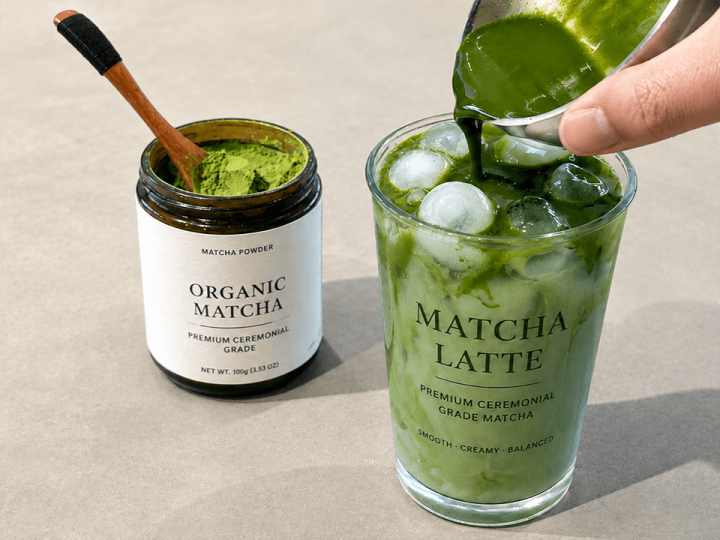
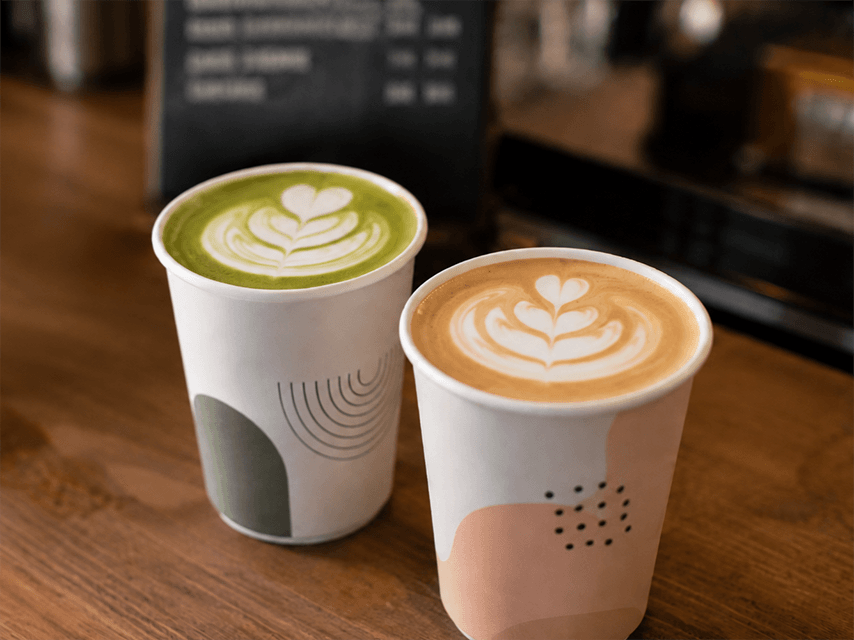
Matcha Lattes and Coffee Lattes
Milk softens the bitterness of both drinks. However, it can also reduce the visibility of their natural flavor.
A matcha latte requires enough powder and tea intensity to remain noticeable in milk. Using a very delicate matcha may create an attractive color but a weak final drink.
Coffee lattes rely on concentrated espresso, which generally retains a recognizable roasted flavor after milk is added.
Preparation and Convenience Compared
Coffee preparation ranges from instant coffee and single-serve capsules to manual pour-over systems and professional espresso machines.
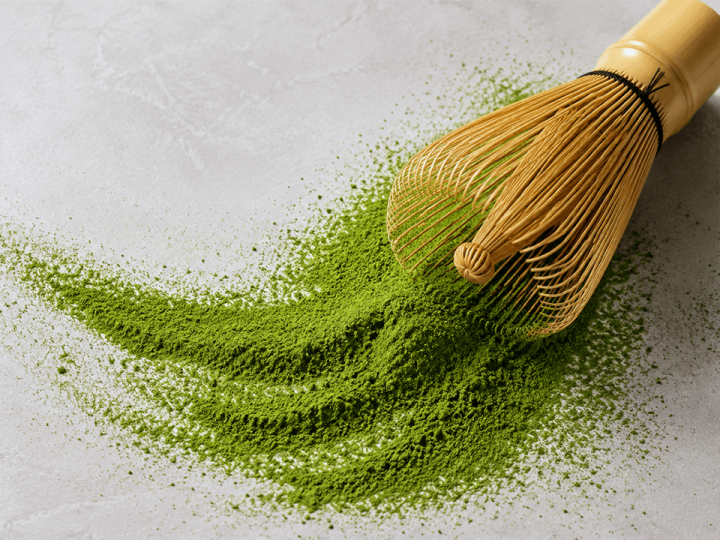
Matcha preparation is usually simpler in terms of equipment but requires careful mixing. The powder must be dispersed into water using a bamboo whisk, electric frother, shaker or blender.
Preparing Matcha
For traditional preparation, the powder is sifted and whisked with water. In cafés, matcha is often mixed into a concentrated base before milk and other ingredients are added.
Correct water temperature and mixing help reduce lumps and excessive bitterness. Because matcha is a suspension rather than a fully soluble ingredient, some settling is normal if the drink stands for a long period.
Preparing Coffee
Coffee preparation depends heavily on the selected method. Espresso requires specialized equipment and grind control, while drip coffee and French press are easier to scale for multiple servings.
Coffee beans also begin losing aroma after grinding, so grind timing and storage affect the finished cup.
Which Is More Convenient?
For home use, convenience depends on the equipment already available. Instant coffee may be faster than whisked matcha, while an electric frother can make matcha preparation nearly as simple.
For cafés, coffee generally requires more equipment and maintenance. Matcha requires less specialized machinery but depends on accurate powder measurement and consistent staff technique.
Matcha and Coffee Contain Different Plant Compounds
Matcha and coffee should not be reduced to caffeine alone.
Matcha contains tea catechins, including EGCG, as well as L-theanine and other tea compounds. Coffee contains chlorogenic acids, trigonelline, caffeine and compounds created during roasting.
These differences contribute to flavor and have also been studied in nutrition research. However, neither drink should be presented as a treatment for disease, and broad laboratory findings should not be converted into guaranteed consumer outcomes.
Avoiding Exaggerated Health Comparisons
Claims such as “matcha detoxes the body,” “coffee is unhealthy” or “matcha prevents caffeine crashes” oversimplify the evidence.
A more accurate conclusion is that both beverages contain caffeine and plant-derived compounds, while their practical effects depend on the amount consumed, the complete diet and the individual.
Added Sugar Can Change the Comparison
Plain matcha and black coffee are very different from heavily sweetened café drinks.
A matcha latte made with syrup, sweetened powder and flavored milk may contain much more sugar than traditionally prepared matcha. The same applies to coffee drinks containing sauces, whipped toppings and sweetened cream.
Consumers comparing matcha and coffee should therefore compare complete recipes rather than assuming that every matcha drink is automatically the lighter option.
For beverage brands, the formulation should clearly distinguish between pure matcha powder, sweetened matcha latte mixes and ready-to-drink products.
Matcha vs Coffee for Different Times of Day
The best timing depends more on caffeine dosage and individual sensitivity than on whether the source is matcha or coffee.
Morning Use
Coffee may suit consumers seeking stronger stimulation at the beginning of the day. Matcha may suit those who prefer a moderate caffeine dose or a tea-based morning routine.
Afternoon Use
A lower-dose matcha may be easier for some people to fit into the afternoon than a large coffee. However, matcha still contains caffeine and can disrupt sleep when consumed too late.
Caffeine’s elimination half-life varies widely, and its effects can remain for hours after consumption.
Before Physical Activity
Both beverages can provide caffeine. The more important factors are the total dose, timing, individual tolerance and whether the drink causes digestive discomfort.
Neither matcha nor coffee should be assumed to provide a universal performance benefit for every person.
During Focused Work
Some consumers prefer coffee for a stronger initial effect. Others prefer the combination of moderate caffeine and tea compounds found in matcha.
The choice is subjective, and adequate sleep remains more important than using either drink to compensate for persistent fatigue.
Who Should Be Careful with Caffeine?
The FDA cites 400 milligrams per day as an amount not generally associated with negative effects for most healthy adults. This is not a recommended target, and some people experience unwanted effects at much lower levels.
People who are pregnant, breastfeeding, taking certain medications or managing relevant medical conditions should discuss caffeine intake with a healthcare professional. The American College of Obstetricians and Gynecologists states that moderate caffeine consumption during pregnancy is generally considered below 200 milligrams per day.
Anyone experiencing persistent insomnia, anxiety, palpitations, digestive discomfort or headaches after consuming caffeine should consider reducing intake and seeking appropriate professional advice.
Matcha vs Coffee for Cafés and Beverage Brands
For cafés, matcha and coffee represent different product opportunities rather than a direct either-or decision.
Coffee is a mature category with strong consumer familiarity. Matcha provides a visually distinctive option that can extend a menu into tea, wellness-positioned drinks, fruit combinations, desserts and retail powder products.
Commercial Application Comparison
| Business Consideration | Matcha | Coffee |
|---|---|---|
| Customer familiarity | Growing but varies by market | Very high in most markets |
| Visual differentiation | Strong natural green appearance | Depends on roast and milk presentation |
| Equipment requirements | Whisk, frother, shaker or blender | Grinder, brewer or espresso machine |
| Flavor customization | Works with milk, fruit, coconut and desserts | Works with milk, syrups, chocolate and cold formats |
| Caffeine control | Adjusted through powder dosage | Adjusted through coffee dose and extraction |
| Staff consistency risk | Powder measurement and lumping | Grinding, extraction and machine calibration |
| Retail opportunities | Powder tins, pouches and latte blends | Beans, ground coffee, capsules and concentrates |
Standardize Matcha Dosage
A café should specify matcha by weight rather than relying only on spoon measurements.
The recipe should identify the powder quantity, water volume, mixing method, milk quantity and sweetener. This allows the business to estimate caffeine more accurately and maintain the same drink across employees and locations.
Select Matcha for the Final Recipe
The most expensive drinking matcha is not necessarily the best option for a latte.
A café-grade matcha with stronger tea character may perform better after milk and syrup are added. Samples should be tested inside the complete commercial recipe rather than evaluated only as dry powder.
Avoid Unsupported Energy Claims
Terms such as “clean energy,” “no crash” and “all-day focus” may be attractive in marketing, but they can be difficult to support as guaranteed product claims.
A more responsible description is that matcha naturally contains caffeine and L-theanine, with caffeine content depending on the powder and serving dosage.
How Beverage Brands Should Compare Matcha and Coffee Products
A beverage company developing a matcha or coffee product should begin with the intended consumer experience.
The product brief should define the target caffeine level, flavor, sweetness, serving size, preparation format and sales channel.
Matcha Product Development
Matcha can be used in pure powders, latte blends, sachets, ready-to-drink beverages and functional drink concepts. Each format creates different challenges involving dispersibility, sedimentation, color stability and flavor balance.
Testing the Complete Formula
A matcha sample should be tested with the actual milk, sweetener, flavor system and processing conditions.
Why Dry-Powder Color Is Not Enough
A powder may appear bright green but become pale in milk or change during heat treatment. Commercial selection should therefore be based on final-product performance rather than photographs alone.
Coffee Product Development
Coffee product development may involve bean origin, roast level, grind, extraction, concentrate strength and packaging format.
Ready-to-drink coffee also requires attention to acidity, flavor stability, milk compatibility and processing.
So, Is Matcha Better Than Coffee?
Matcha is not universally better than coffee, and coffee is not universally better than matcha.
Matcha may be the better choice for someone who prefers a tea-based flavor, adjustable caffeine dosage, natural green color or milk and fruit applications. Coffee may be the better choice for someone who prefers roasted flavor, stronger stimulation or established brewing formats.
The following summary offers a practical way to decide:
| Preference | More Likely to Suit |
|---|---|
| Stronger typical caffeine serving | Coffee |
| Moderate and adjustable caffeine dose | Matcha |
| Roasted and aromatic flavor | Coffee |
| Vegetal and umami flavor | Matcha |
| Espresso-based milk drinks | Coffee |
| Fruit, coconut or colorful layered drinks | Matcha |
| Very low caffeine option | Decaffeinated coffee |
| Caffeine-free option | Neither regular matcha nor regular coffee |
The final choice should reflect taste, dosage, individual tolerance and the complete recipe.
Frequently Asked Questions
Does Matcha Have More Caffeine Than Coffee?
Matcha contains substantial caffeine per gram of powder, but a typical serving often uses a small amount. A standard brewed coffee usually contains more total caffeine than a matcha made with 1.5 to 2 grams of powder, although recipes vary.
Does Matcha Give Energy Without a Crash?
Matcha contains caffeine and may still cause jitters, sleep disruption or an unpleasant drop in alertness for some people. L-theanine may influence attention and the subjective experience, but it does not guarantee a crash-free response.
Is Matcha Better for Caffeine-Sensitive People?
Matcha may be easier to control because the powder dosage can be reduced. However, it is not caffeine-free, and concentrated servings can contain a meaningful amount.
People with strong caffeine sensitivity may prefer decaffeinated coffee, non-caffeinated herbal drinks or a very small matcha serving.
Is Matcha Healthier Than Coffee?
Both contain different plant compounds and can fit into a balanced diet. Matcha is rich in tea catechins, while coffee contains chlorogenic acids and other compounds. Neither should automatically be labeled healthier without considering serving size, added sugar and individual needs.
Can Matcha Replace Morning Coffee?
It can for consumers who enjoy the flavor and obtain enough stimulation from its caffeine level. Others may find that a typical matcha serving feels milder than their usual coffee.
The transition may be easier when the matcha dosage and total caffeine intake are compared rather than changing beverages without considering strength.
Is a Matcha Latte Lower in Caffeine Than a Coffee Latte?
Often, but not always. The result depends on how many grams of matcha or espresso shots are used.
A matcha latte made with a large amount of powder may contain more caffeine than a small single-shot coffee latte.
Can Matcha and Coffee Be Consumed on the Same Day?
They can both contribute to total daily caffeine intake. The combined amount from matcha, coffee, energy drinks, chocolate, supplements and other products should be considered rather than evaluating each drink separately.
Final Thoughts
The matcha vs coffee comparison is not only about deciding which drink contains more caffeine.
Coffee commonly provides a stronger caffeine serving and a familiar roasted flavor. Matcha offers a tea-based profile, flexible powder dosage and wider use in colorful milk, fruit and food applications.
Claims that one always provides better energy or is automatically healthier should be treated cautiously. Serving size, recipe, timing and individual caffeine sensitivity have a greater influence than the beverage name alone.
For consumers, the better option is the drink that fits personal taste and provides an appropriate caffeine level without unwanted effects. For cafés and beverage brands, the opportunity lies in understanding how each ingredient performs and developing recipes that are consistent, transparent and suitable for the intended market.
Explore Commercial Matcha Options with TangMist
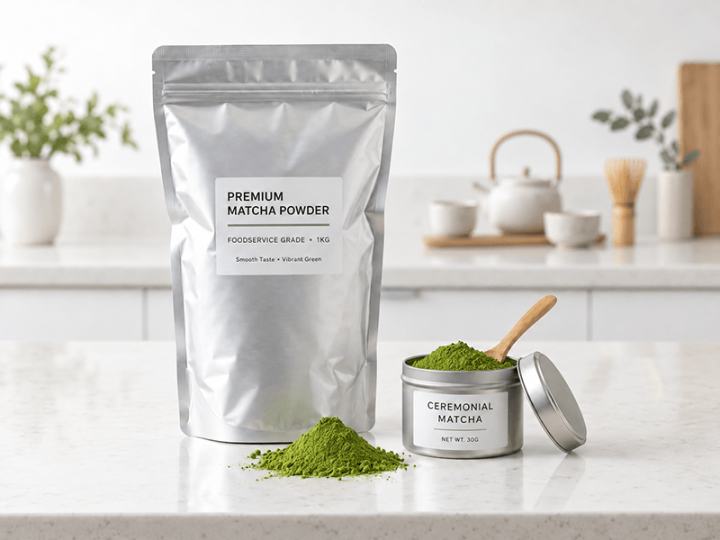
TangMist supplies bulk matcha powder for cafés, beverage companies, food manufacturers, distributors and private label brands.
Different matcha grades are available for traditional drinking, café lattes, fruit beverages, baking, desserts and powdered formulations. TangMist can support commercial buyers with application-based sample selection, bulk packaging, product specifications, batch documentation and long-term supply planning.
Request Matcha Samples
Businesses can provide their intended application, serving dosage, required flavor, target color, packaging format and expected order volume.
Contact TangMist to compare matcha samples and identify a suitable grade for café, beverage or private label product development.